 sales@webguruz.in
 +1 (213) 715-5368
Vedanshi
2026-10-23
7 min read
Custom HubSpot Integrations: Benefits, Examples, and Best Practices
Your business uses HubSpot to manage customer relationships, but disconnected systems create data issues.
Read More
Published On:2026-01-21
If you’ve been wondering how to create a full-funnel marketing strategy that actually converts, you’re in the right place. The combination of HubSpot’s powerful tools and AI capabilities has changed the game for businesses of all sizes. Let’s break down exactly how you can build a marketing funnel that guides prospects from first click to loyal customer.
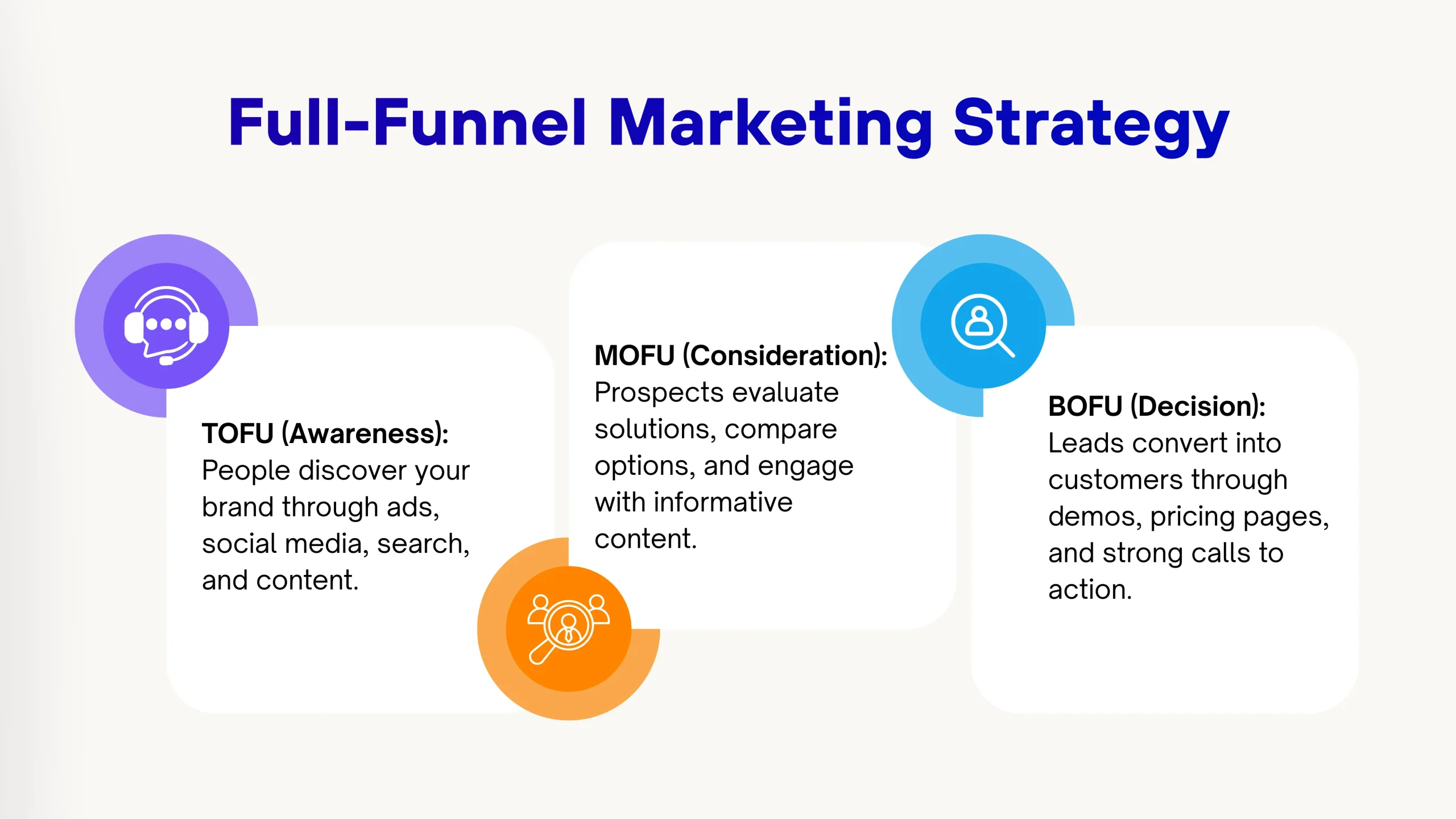
A full-funnel marketing strategy covers every stage of your customer’s journey. Think of it like a roadmap that takes someone from “Who are you?” to “I’m ready to buy” to “I’m telling all my friends about you.”
The traditional marketing funnel has three main stages:
Most companies focus heavily on getting people into the funnel while ignoring what happens after. A true full-funnel marketing campaign continues beyond the sale, turning customers into repeat buyers and brand advocates.
HubSpot CRM workflows give you everything you need to manage prospects at every stage. Unlike juggling five different tools that don’t talk to each other, HubSpot brings your entire marketing funnel tactics into one platform.
The HubSpot marketing automation features let you create personalized experiences at scale. According to recent studies, businesses using marketing automation see an average 451% increase in qualified leads. That’s not a small bump; that’s transformational growth.
When you combine HubSpot Services with AI agents and funnel optimization strategies in HubSpot, you create a system that gets smarter over time. Your campaigns learn what works, adjust automatically, and deliver better results month after month.
The awareness stage is where inbound marketing shines. Instead of interrupting people with ads, you attract them with valuable content.
Start by creating blog posts, videos, and resources that answer the questions your target audience is asking. HubSpot’s SEO tools help you identify what people are searching for and optimize your content accordingly. The platform shows you which keywords to target and how your pages are performing in search results.
HubSpot lets you schedule and publish social content directly from the platform. You can monitor engagement, respond to comments, and track which posts drive traffic to your website. This unified approach means you’re not switching between six browser tabs to manage your social presence.
Smart forms in HubSpot adapt based on what information you already have about a visitor. If someone’s filled out a form before, they see different questions the next time. This progressive profiling makes the experience better for users while gathering more data for you.
AI comes into play here by analyzing which content performs best, suggesting optimal posting times, and even helping generate content ideas based on what’s working in your industry.
This is where many businesses drop the ball. Someone downloads your ebook or attends your webinar, and then, nothing. Or worse, they get hammered with sales calls before they’re ready. HubSpot Automation Solutions fix this problem by creating intelligent nurture sequences. Here’s how to set them up:
Create email sequences that deliver value while moving prospects closer to a purchase decision. A certified HubSpot developer can build workflows that trigger based on specific behaviors; did they open your email? Click a link? Visit your pricing page?
For example, if someone downloads a beginner’s guide, they automatically receive a series of educational emails over the next few weeks. But if they visit your pricing page, they get bumped into a different workflow that addresses buying concerns.
Not all leads are created equal. HubSpot’s lead scoring assigns points based on actions and characteristics. Someone who visited your site once gets a low score. Someone who’s opened five emails, downloaded three resources, and visited your pricing page? That’s a hot lead worth immediate attention.
AI agents and funnel optimization strategies in HubSpot take this further by predicting which leads are most likely to convert based on patterns from thousands of previous interactions. The system learns that people who engage with certain content types or visit specific pages are 3x more likely to become customers.
HubSpot’s smart content features change what people see based on their stage in the funnel. A first-time visitor sees an introductory message. A returning prospect sees a case study. An SQL (Sales Qualified Lead) sees a demo request form. All automatically, no manual work required.
When prospects reach the decision stage, alignment between marketing and sales becomes critical. This is where HubSpot Sales Consulting and RevOps strategies prove their worth.
HubSpot gives your sales team everything they need to close deals efficiently. They can see every interaction a prospect has had with your company, including every email opened, page visited, and content downloaded. Walking into a sales call with this context is like having superpowers.
No more email ping-pong trying to find a meeting time. HubSpot’s meeting scheduler integrates with your calendar and lets prospects book time directly. Confirmation emails, reminders, and follow-ups all happen automatically.
Track every opportunity through your sales process with customizable deal stages. HubSpot CRM workflows can automatically assign tasks, send notifications, and update deal statuses based on actions taken.
Analyze your sales pipeline to identify bottlenecks. If deals consistently stall at a certain stage, the system flags it for review. Maybe your pricing proposal needs work, or prospects need more social proof at that point.
Here’s where a full-funnel marketing campaign strategy goes beyond traditional thinking. The funnel doesn’t end at purchase. It continues through customer success, retention, and advocacy.
Create automated onboarding sequences that help new customers get value quickly. Happy customers who see results fast are less likely to churn and more likely to upgrade or refer others.
These loops use HubSpot surveys and feedback tools to understand customer satisfaction. Net Promoter Score (NPS) surveys can trigger automatically at key milestones, giving you real-time insights into customer health.
These capabilities allow you to build sophisticated workflows that identify expansion opportunities. If a customer is using 80% of their plan limits, they automatically receive information about upgrading. If they’re using Feature A heavily, they get targeted content about Feature B that complements it.
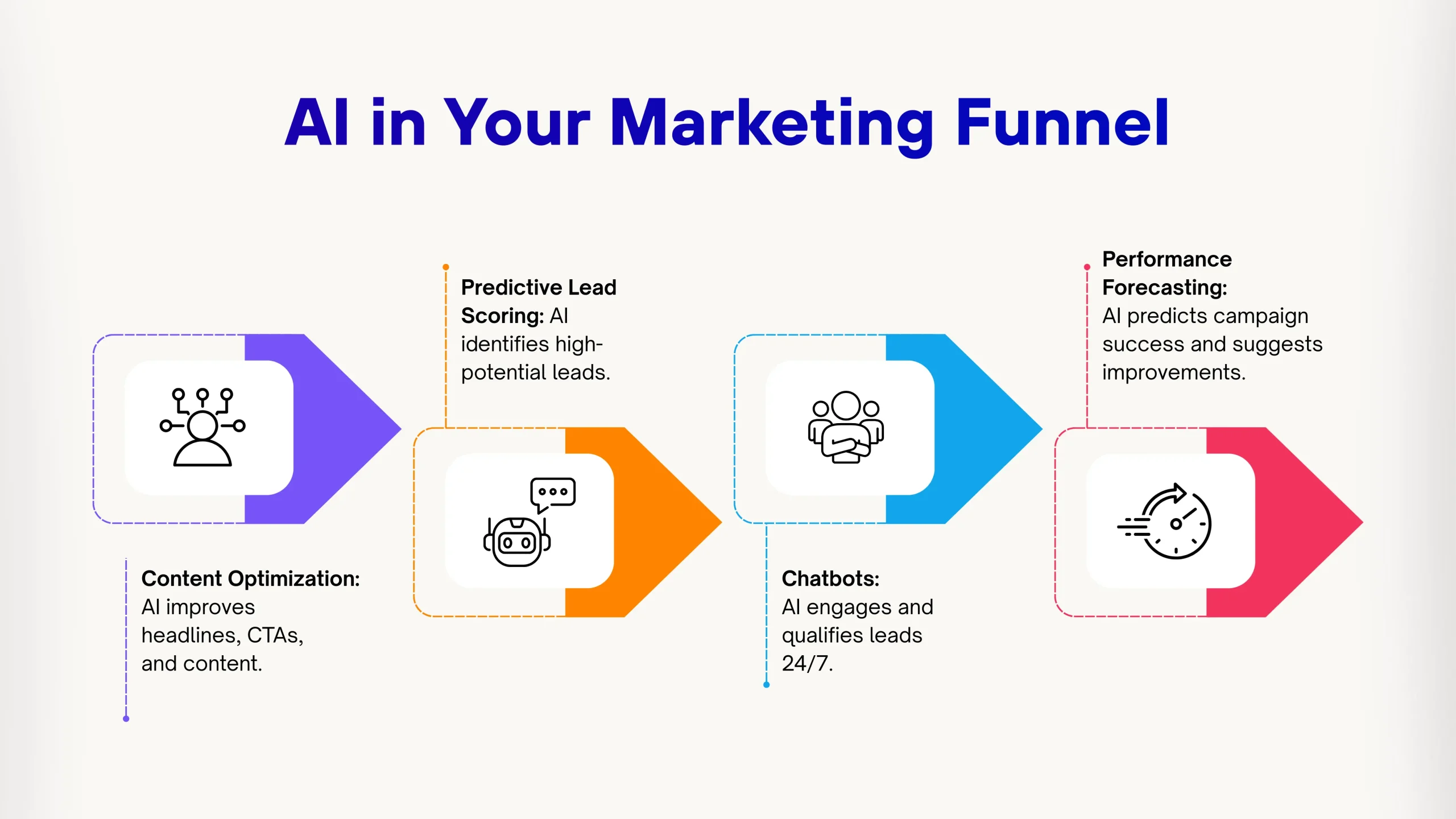
AI isn’t just a buzzword; it’s a practical tool that makes your full-funnel marketing strategy more effective. Here’s how AI enhances each stage:
AI analyzes which headlines, CTAs, and content formats perform best. It can suggest improvements to your landing pages based on successful patterns from thousands of other campaigns.
Traditional lead scoring uses rules you create. AI-powered scoring uses machine learning to identify patterns you might miss. It considers hundreds of factors to predict conversion likelihood with surprising accuracy.
AI chatbots on your website can qualify leads 24/7, answer common questions, and route serious prospects to sales immediately. They learn from every interaction, getting better at understanding intent and providing helpful responses.
AI can predict how campaigns will perform before you launch them, suggesting optimal send times, audience segments, and messaging approaches based on historical data.
Companies that implement comprehensive marketing funnel tactics with HubSpot see measurable improvements. Research shows that businesses with strong alignment between sales and marketing achieve 20% annual revenue growth, compared to a 4% decline for companies with poor alignment.
Marketing automation through HubSpot typically delivers:
When you add AI optimization to the mix, these numbers often improve further as the system continuously learns and adapts.
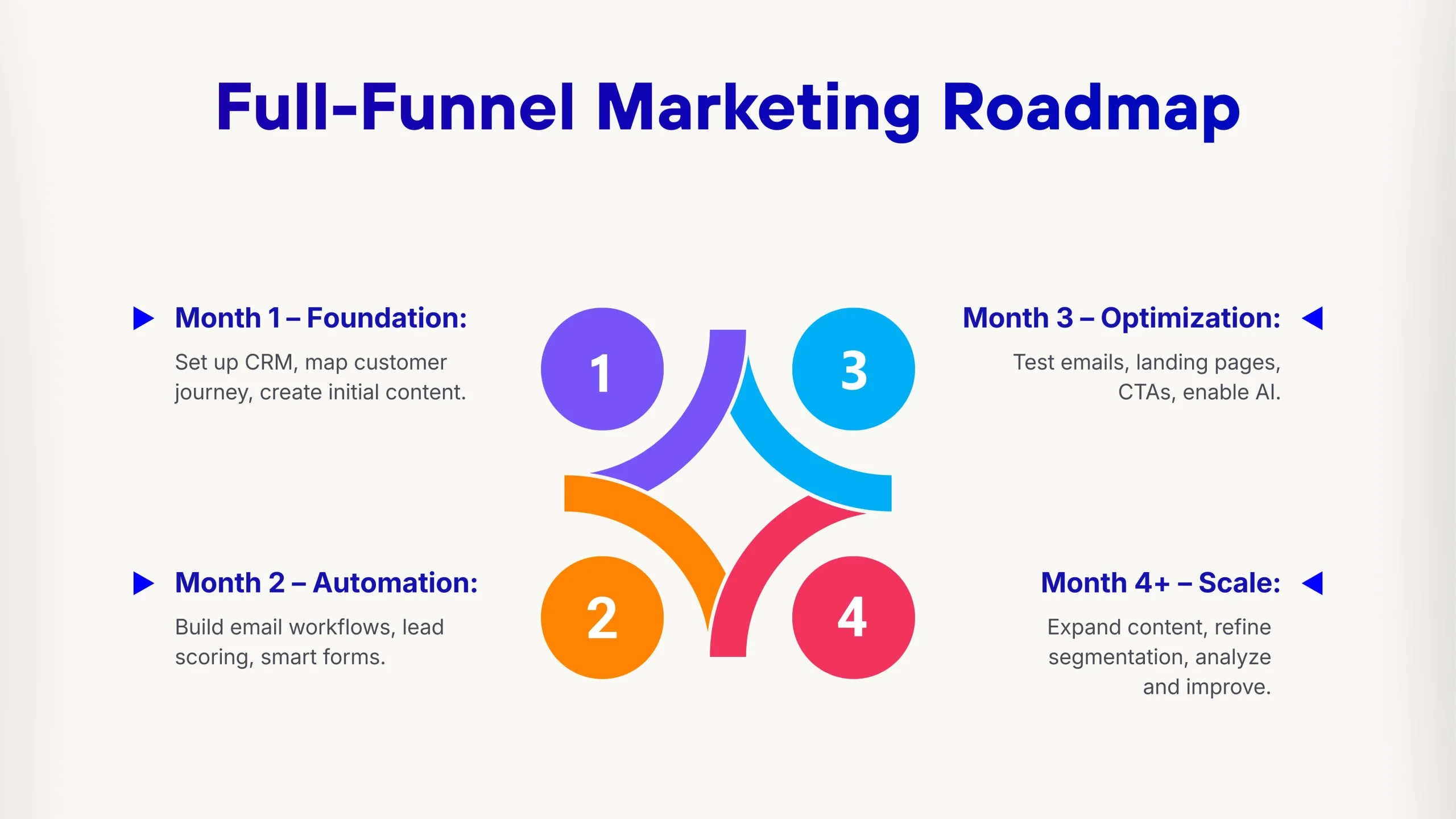
Building a complete marketing funnel doesn’t happen overnight, but here’s a practical approach:
Set up your HubSpot CRM workflows properly. Map out your customer journey and identify key touchpoints. Create your initial content for each funnel stage.
Build your core email workflows for different segments. Set up lead scoring and implement smart forms. Work with a certified HubSpot developer if you need custom functionality.
Start testing different approaches. A/B test email subject lines, landing page layouts, and CTA copy. Enable AI-powered features and let them start learning from your data.
Expand your content library, create more sophisticated nurture tracks, and develop advanced segmentation. Continuously analyze what’s working and double down on successful tactics.
Even with great tools like HubSpot, businesses make predictable mistakes:
Getting lots of traffic means nothing if those visitors don’t convert. Balance your efforts across all stages.
Just because you can automate something doesn’t mean you should. Keep the human touch where it matters, especially in sales conversations and customer support.
HubSpot provides incredible insights, but only if you look at them. Review your analytics weekly and make data-driven decisions about what to improve.
Over 50% of web traffic comes from mobile devices. Make sure every email, landing page, and form works perfectly on phones and tablets.
Most businesses see initial improvements within 60-90 days of implementing HubSpot marketing automation, but building a truly optimized funnel typically takes 6-12 months. Early wins often come from better lead nurturing and follow-up, while long-term gains come from content creation and SEO efforts maturing.
Not necessarily. HubSpot’s interface is designed for marketers to build basic workflows themselves. However, complex automation, custom integrations, and advanced AI HubSpot RevOps workflows often benefit from professional HubSpot Development expertise to ensure everything works seamlessly.
Inbound marketing focuses primarily on attracting and converting leads through valuable content. Full-funnel marketing campaign strategies extend beyond conversion to include customer retention, expansion, and advocacy. Think of inbound marketing as a key component within a broader full-funnel approach.
HubSpot offers different pricing tiers, and many small businesses start with the free CRM and basic Marketing Hub. You don’t need every feature on day one. The key is starting with essential HubSpot Automation Solutions and scaling as you grow and prove ROI.
Modern AI agents and funnel optimization strategies in HubSpot work in the background, analyzing patterns and making recommendations. You don’t need to understand machine learning to benefit. The AI identifies which leads are most likely to convert, suggests the best times to send emails, and optimizes content delivery automatically.
Vedanshi
2026-10-23
7 min read
Your business uses HubSpot to manage customer relationships, but disconnected systems create data issues.
Read More
Vedanshi
2026-10-22
7 min read
Ask ChatGPT, Gemini, or Perplexity to recommend a supplier or a software tool, and you get a short list of names, not ten blue links.
Read More
Vedanshi
2026-10-21
7 min read
Building a website takes more than picking colors, dropping in images, and writing copy.
Read More