 sales@webguruz.in
 +1 (213) 715-5368
Vedanshi
2026-10-23
7 min read
Custom HubSpot Integrations: Benefits, Examples, and Best Practices
Your business uses HubSpot to manage customer relationships, but disconnected systems create data issues.
Read More
Published On:2025-12-11

Remember when building a website meant picking one platform and sticking with it forever? Those days are fading fast. Welcome to the new era, where businesses manage multiple websites across different platforms, and AI makes it all surprisingly manageable. Let’s explore how AI-powered technology is transforming the landscape of multi-CMS web development and what it means for your business.
Here’s what’s happening in the real world: companies are no longer putting all their eggs in one basket. A typical growing business might have its main corporate site on WordPress, an e-commerce store on Shopify, a landing page builder on Webflow, and a portfolio site on Squarespace. Sound complicated? It used to be.
A modern website development company now regularly manages clients who operate on multiple platforms simultaneously. According to recent industry data, many mid-sized businesses use at least two different CMS platforms for various purposes. This isn’t poor planning; it’s smart strategy.
This is because different platforms excel at different things. WordPress dominates blogging and content sites. Shopify rules e-commerce. Webflow gives designers pixel-perfect control. Each platform has its strengths, and businesses want to leverage all of them to their advantage.
The challenge? Managing multiple platforms used to require multiple teams, multiple skill sets, and an excessive amount of time. That’s where AI comes in.
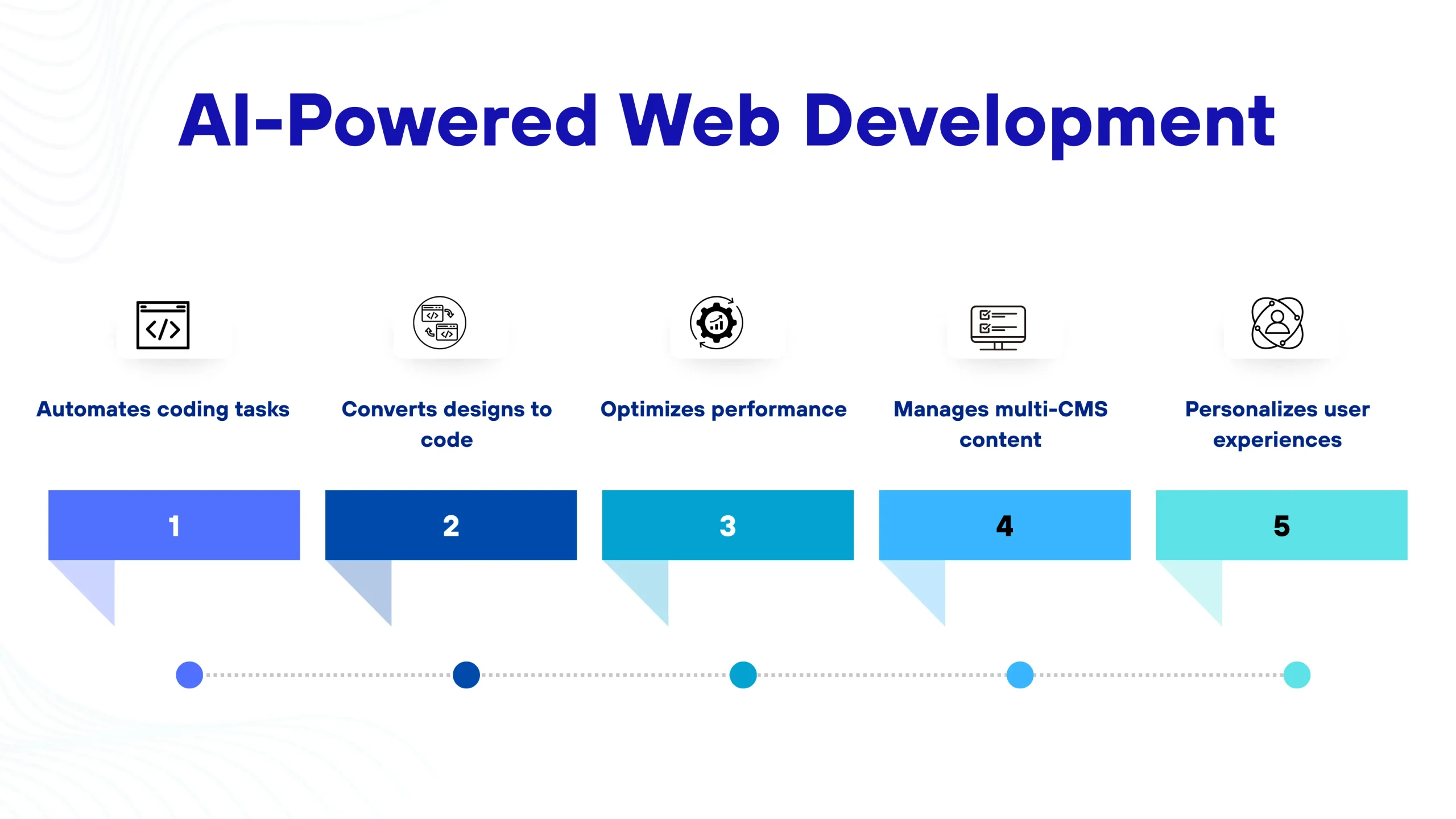
Let’s start with the basics. What is AI-powered web development? Simply put, it’s using artificial intelligence to automate, optimize, and enhance the web development process. Think of it as having a smart assistant that handles repetitive tasks, suggests improvements, and helps you work across different platforms without losing your mind.
AI in web development isn’t about robots building entire websites (not yet, anyway). It’s about:
When you work with web development services that incorporate AI, you’re not just getting faster delivery; you’re getting smarter solutions that adapt and improve over time.
How does AI help with multitasking? This is the million-dollar question for anyone managing multiple websites. Here’s the practical answer:
AI tools can now sync content across different platforms. Write a blog post once, and AI adapts it for your WordPress blog, your Shopify product descriptions, and your Webflow landing page, all with platform-specific optimizations.
Instead of logging into five different dashboards, AI consolidates data from all your sites, showing you what’s working where and why.
AI monitors all your sites simultaneously, flagging security issues, broken links, or performance problems before they become serious.
AI tracks which tasks take the most time and suggests ways to streamline them across platforms.
For agencies offering CMS web development services, AI has become a crucial component. It’s the difference between managing 10 client sites and managing 50 without hiring additional staff.

Let’s talk about the big one. WordPress development services have undergone a significant evolution with the integration of AI. WordPress powers over 43% of all websites globally, and AI is making it even more powerful.
Modern WordPress CMS Development with AI includes:
AI tools like Jetpack AI Assistant and WordLift are revolutionizing the way developers build WordPress sites. They suggest content improvements, generate schema markup automatically, and even help write more effective meta descriptions. For businesses running WordPress alongside other platforms, AI enables consistent maintenance without the need for manual copying and pasting.
Drupal Development Services have always been the choice for complex, enterprise-level projects. Now with AI, Drupal is becoming more accessible without sacrificing power.
Drupal Developers are using AI for:
What makes Drupal special in a multi-CMS environment? It can serve as a headless CMS that feeds content to multiple front-ends. AI makes managing these complex architectures actually feasible for teams of all sizes.
Joomla Development sits in an interesting middle ground, being more powerful than basic builders and more approachable than Drupal. A Joomla Web Development Company today uses AI to bridge the gap between simplicity and functionality.
AI enhancements in Joomla include:
For businesses using Joomla as part of a multi-CMS strategy, AI helps maintain it alongside other platforms without requiring deep Joomla expertise for every team member.
Webflow Web Development has gained massive popularity among designers who want control without writing code. AI takes this further by:
When you’re managing both a Webflow marketing site and a WordPress blog, AI can maintain design consistency across both platforms automatically, a task that previously required painstaking manual work.
Wix Development Services might surprise you. While Wix markets itself to non-developers, professional website development companies use it strategically for specific projects. Wix’s AI includes:
For multi-CMS strategies, Wix works well for quick microsites or campaign pages while your main presence resides elsewhere. AI makes syncing content between Wix and other platforms actually practical.
With growing AI capabilities, Squarespace Web Development combines stunning templates. Recent additions include:
When running Squarespace alongside other platforms, AI helps maintain brand consistency across all your web properties, ensuring your Squarespace portfolio looks cohesive with your WordPress blog.
Let’s dive into the e-commerce world, where multi-platform strategies are increasingly common.
Shopify development services now incorporate AI in ways that seemed impossible five years ago:
Many businesses run Shopify for sales while maintaining their main brand site on WordPress or another CMS. AI tools now sync inventory, customer data, and content between these platforms seamlessly.
AI helps manage the complexity with the BigCommerce development service, focusing on larger operations:
For companies selling on BigCommerce while managing content elsewhere, AI creates a unified view of your customer journey across all platforms.
This website development serves serious e-commerce operations. With Adobe Sensei, Magento website development includes:
Managing Magento alongside other CMS platforms used to require significant technical expertise. AI tools now provide unified dashboards and automated synchronization, making multi-platform management much more accessible.
So, what is the future of CMS? Based on current trends, here’s where things are heading:
The backend (where content lives) is separate from the frontend (what users see). AI manages the complexity of connecting these pieces.
Your CMS will suggest content improvements, optimize for different platforms automatically, and even generate draft content based on your goals.
One interface to manage all your CMS platforms, with AI handling the platform-specific requirements automatically.
Your CMS will predict what content will perform well, when to publish it, and how to optimize it for each platform.
Talk to your CMS or sketch an idea and watch AI turn it into reality across all your platforms.
The future isn’t about picking the “best” CMS; it’s about using the right ones for each job and letting AI handle the complexity of managing them all.
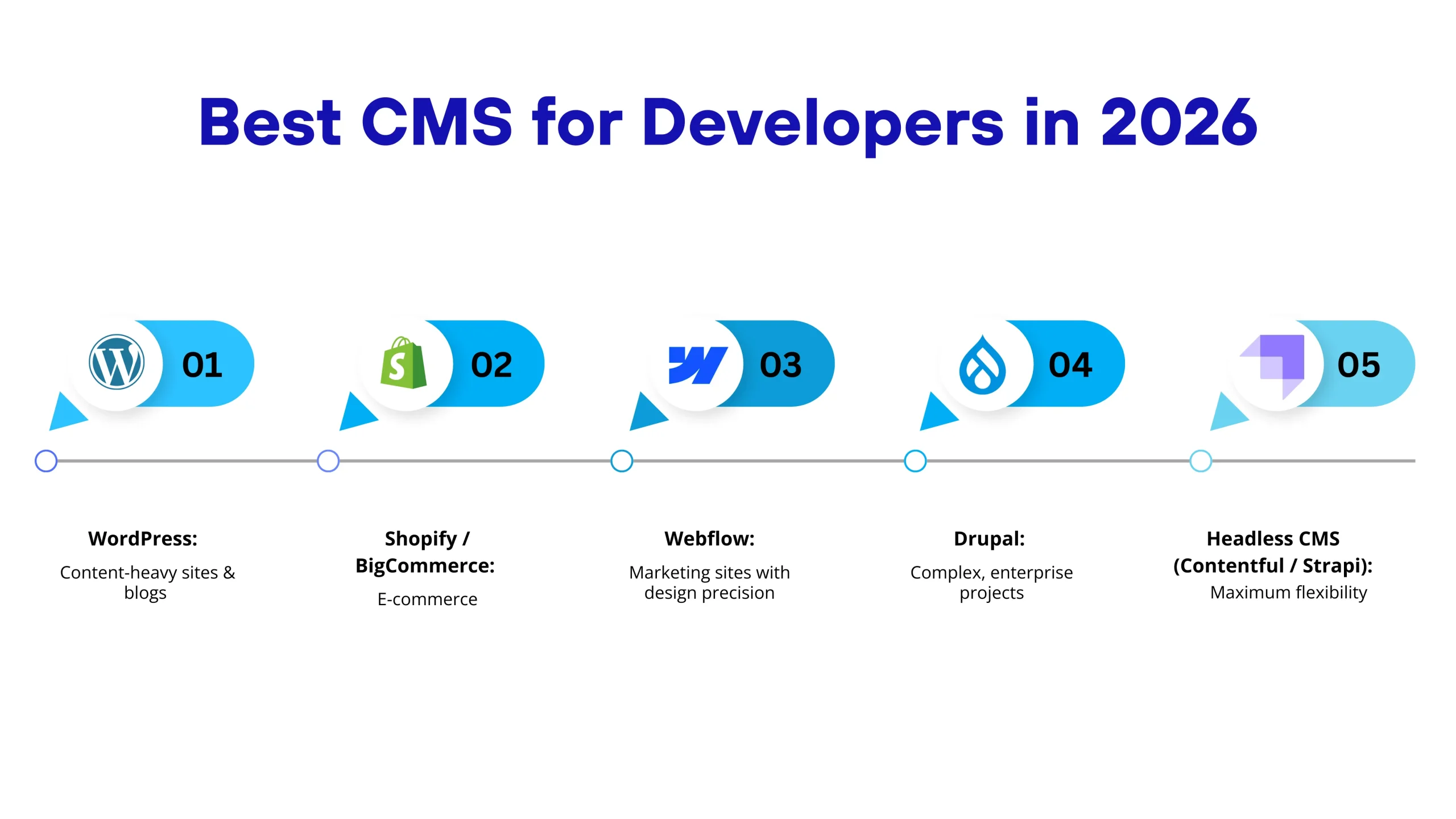
Best CMS for developers? The honest answer for 2026 isn’t a single platform; it’s a strategic combination. Professional developers now think in ecosystems:
The “best” CMS depends on your specific needs, but AI makes it possible to use multiple platforms effectively without getting overwhelmed with complexity.
AI lowers the barrier to entry. Small businesses can achieve results that once required large development teams.
CMS website Development Services deliver projects 40-60% faster with AI assistance while maintaining or improving quality.
Websites don’t just launch anymore; they evolve continuously as AI identifies and implements improvements.
AI tools automatically check and fix accessibility issues across all platforms, making the web more inclusive.
Multi-platform management costs drop significantly when AI handles routine tasks and prevents problems before they occur.
Let’s get practical. What does all this mean for your business?
Launch new sites and features in days, not months. AI handles much of the heavy lifting in CMS web development.
Maintain the same look, feel, and messaging across all platforms automatically.
AI catches issues early and automates routine updates across all your platforms.
AI monitors all your sites simultaneously for security threats and applies patches automatically.
AI optimizes each platform according to its strengths, ensuring fast loading times across all platforms.
Add new platforms or sites to your ecosystem without incurring a proportional increase in management complexity.
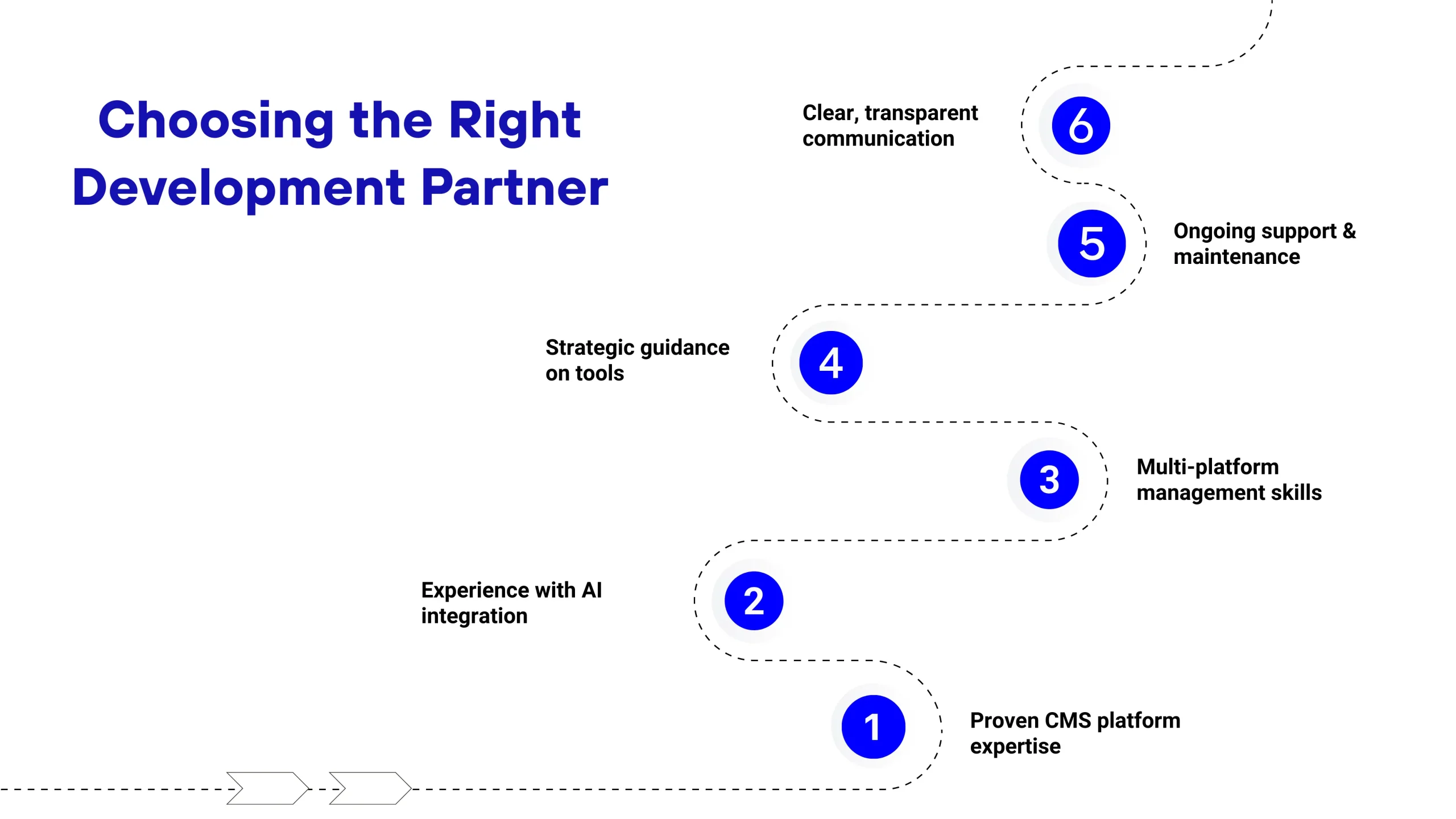
Not all web development services are equal when it comes to multi-CMS, AI-powered development. Here’s what to look for:
They should have proven experience with the specific platforms you need.
Ask for examples of how they use AI in their development process.
They should have case studies of managing multiple CMS platforms for clients.
The best website development company helps you choose the right platforms for each purpose, rather than just pushing their favorite tool.
Multi-platform sites need continuous monitoring. Ensure they offer comprehensive maintenance.
You should understand what they’re doing and why, even if you’re not a technical expert.
You might worry that adding AI to multi-CMS management sounds complicated. The reality? It’s actually simpler than managing multiple platforms without AI.
Modern AI tools have user-friendly interfaces. You don’t need to be a data scientist or have a computer science degree. If you can use a smartphone, you can use AI-powered CMS tools.
Training time for most AI web development tools ranges from a few hours to a few days. Not weeks or months. The investment pays off immediately through time saved and problems prevented.
Security is crucial when managing multiple platforms. AI helps by:
With AI assistance, multi-platform security becomes more robust, not less, because you have intelligent systems watching everything 24/7.
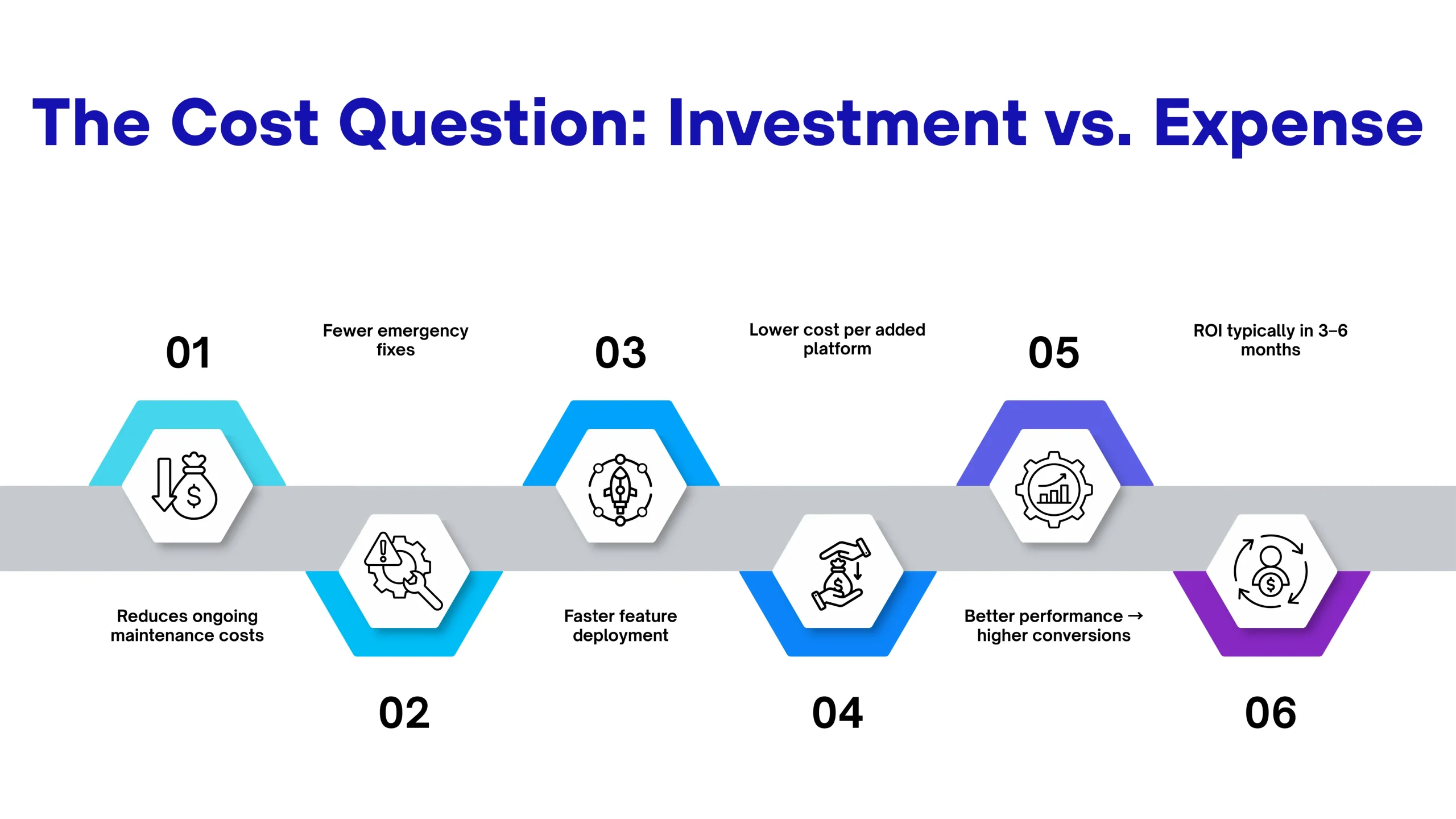
Yes, AI-powered CMS Web Development Services may cost more upfront than basic development. But the economics work strongly in your favor:
Most businesses see ROI within 3-6 months of implementing AI-powered multi-CMS management.
Ready to move forward? Here’s how to start:
No. AI handles repetitive tasks and automation, but human expertise remains essential for strategy, creative decisions, and complex problem-solving. AI makes developers more effective, not obsolete.
Absolutely. AI tools have become increasingly affordable, and the time and cost savings often make them cheaper than traditional approaches. Many AI features are now built into standard CMS platforms at no extra cost.
For basic implementation, the typical duration is 2-4 weeks. Full optimization might take 2-3 months. However, you’ll start seeing benefits from day one.
When working with reputable providers, yes. Modern AI tools follow strict security protocols and data privacy regulations. Always verify that your development partner uses certified, secure AI solutions.
That’s the beauty of AI-powered multi-CMS management; adding platforms becomes easier, not harder. The AI systems adapt to new platforms, and your processes scale smoothly.
Vedanshi
2026-10-23
7 min read
Your business uses HubSpot to manage customer relationships, but disconnected systems create data issues.
Read More
Vedanshi
2026-10-22
7 min read
Ask ChatGPT, Gemini, or Perplexity to recommend a supplier or a software tool, and you get a short list of names, not ten blue links.
Read More
Vedanshi
2026-10-21
7 min read
Building a website takes more than picking colors, dropping in images, and writing copy.
Read More