 sales@webguruz.in
 +1 (213) 715-5368
Vedanshi
2026-10-09
7 min read
How to Use HubSpot AI Agents to Automate Sales, Marketing, and Customer Support
A sales team spends hours researching prospects. Marketing repeats the same tasks across campaigns.
Read More
Published On:2026-01-06
Remember when managing PPC campaigns meant spending hours adjusting bids, analyzing spreadsheets, and hoping your changes would work? Those days are changing fast. Artificial intelligence is transforming how businesses handle paid advertising, and the results are impressive.
If you’re running ads on Google, Amazon, YouTube, or any other platform, understanding how AI in PPC works isn’t just helpful anymore. It’s becoming necessary to stay competitive.
Let me walk you through how AI is changing the paid advertising game and what it means for your business.
Before we get into the details, let’s clear up what we mean by AI-powered PPC campaigns. We’re not talking about robots taking over your marketing department. Instead, think of AI as a really smart assistant that can process huge amounts of data faster than any human team could.
Here’s what’s actually happening behind the scenes:
AI analyzes thousands of data points every second, including which keywords are performing best, what time of day gets the most conversions, which audiences respond to your ads, and how your competitors are bidding. Then it makes adjustments automatically to improve your results.
The difference between traditional PPC and AI-Driven PPC Campaigns is like the difference between manually adjusting your home’s temperature throughout the day versus having a smart thermostat that learns your preferences and does it for you.
Traditional PPC management services required constant human monitoring. Someone had to check campaigns daily, make bid adjustments, pause underperforming ads, and scale up what was working. It was time-consuming and, honestly, pretty exhausting.
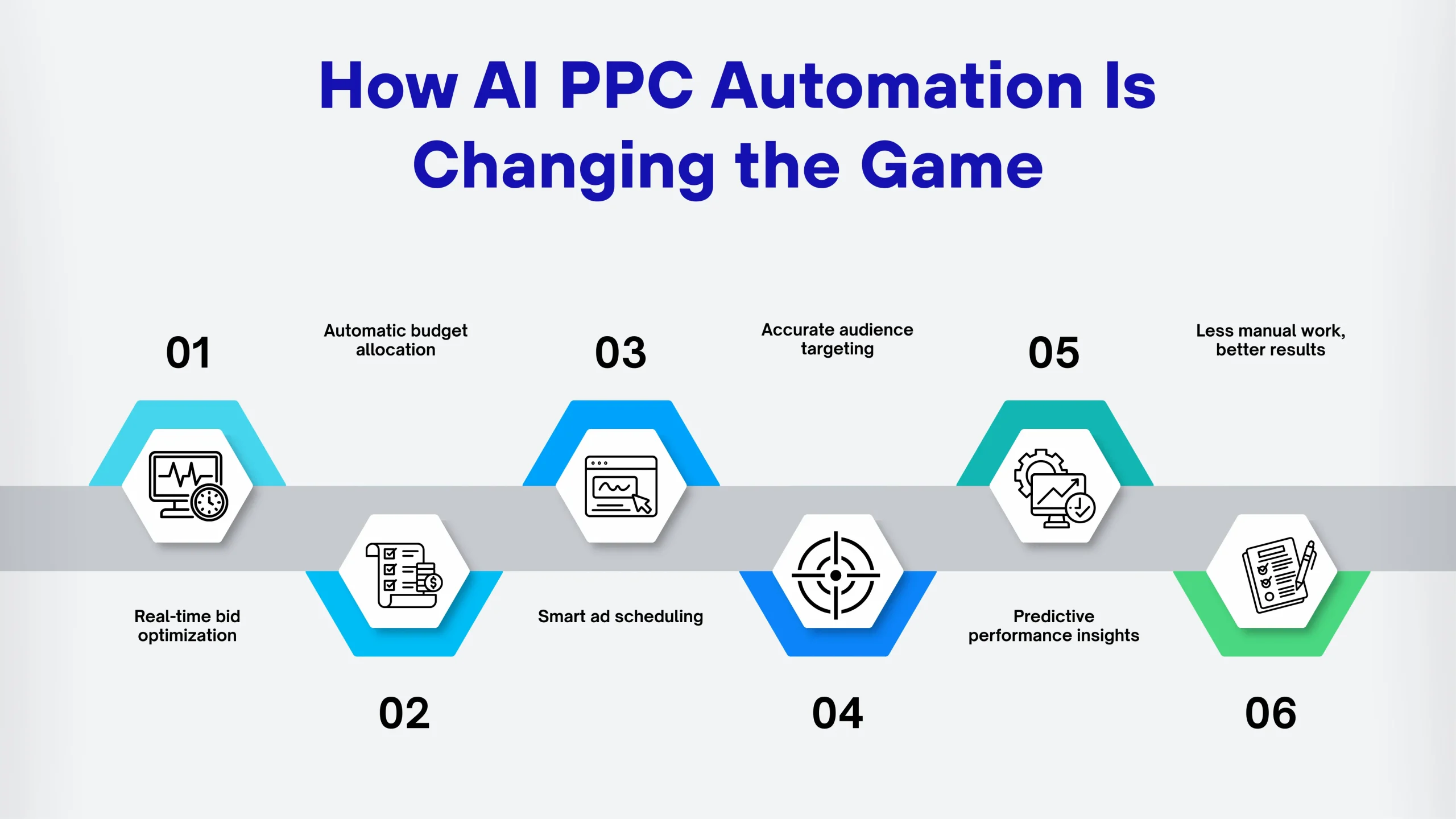
AI PPC automation tools handle these tasks in real time. They don’t sleep, don’t take breaks, and don’t miss opportunities.
Here’s what these tools typically do:
AI adjusts your bids automatically based on the likelihood of conversion, not just on fixed rules you set months ago.
Money flows automatically to campaigns and ad groups that are performing well.
Your ads show up at times when your target audience is most likely to convert.
AI identifies patterns in who’s converting and finds more people like them.
The system forecasts trends and adjusts strategy before problems happen.
Think about working with a Google Ads Agency that uses these tools. They can manage multiple client accounts simultaneously while the AI handles the repetitive optimization tasks. This means their human experts spend time on strategy and creative decisions instead of manual bid adjustments.
Let’s talk about what matters most: results. How does AI PPC Management actually improve your bottom line?
This is the big one. AI typically improves ROAS (Return on Ad Spend) by identifying exactly which clicks are worth more and bidding accordingly. An eCommerce PPC Agency using AI tools often sees a 20-40% improvement in ROAS for their clients within the first few months.
Many businesses pair their PPC efforts with services from a Content Marketing Agency to create a complete digital strategy. While AI optimizes your paid campaigns, quality content builds organic traffic and brand authority.
Why? Because AI spots patterns humans miss. It may detect that people who visit your site on Tuesday afternoons from mobile devices in specific zip codes convert at twice the normal rate. That’s extremely specific, and a human would never catch it by looking at reports.
We’ve all thrown money at keywords or audiences that seemed promising but didn’t convert. AI reduces this waste significantly. It identifies non-performers faster and redirects budget to what’s actually working.
For local PPC campaigns, this is especially valuable. When you’re targeting specific geographic areas, every dollar counts. AI helps ensure you’re reaching the right neighborhoods at the right times.
Traditional campaign optimization might happen weekly or even monthly. AI in PPC optimizes continuously, sometimes making hundreds of micro-adjustments per day. This speed means you capture opportunities competitors miss and avoid wasting money on things that didn’t work.
Here’s something people don’t talk about enough. When AI handles the tedious stuff, marketers can focus on what actually requires human creativity and insight. Things like developing better ad copy, creating compelling offers, improving landing pages, and understanding customer psychology.
Your marketing team can dedicate more time to creating engaging visual content. Whether that means working with designers on Infographics & Motion Graphics that explain your products or developing video content that tells your brand story, AI frees up time for creative work that truly connects with audiences.
A Paid Advertising Agency using AI tools can manage more clients without sacrificing quality because the technology handles routine optimization.
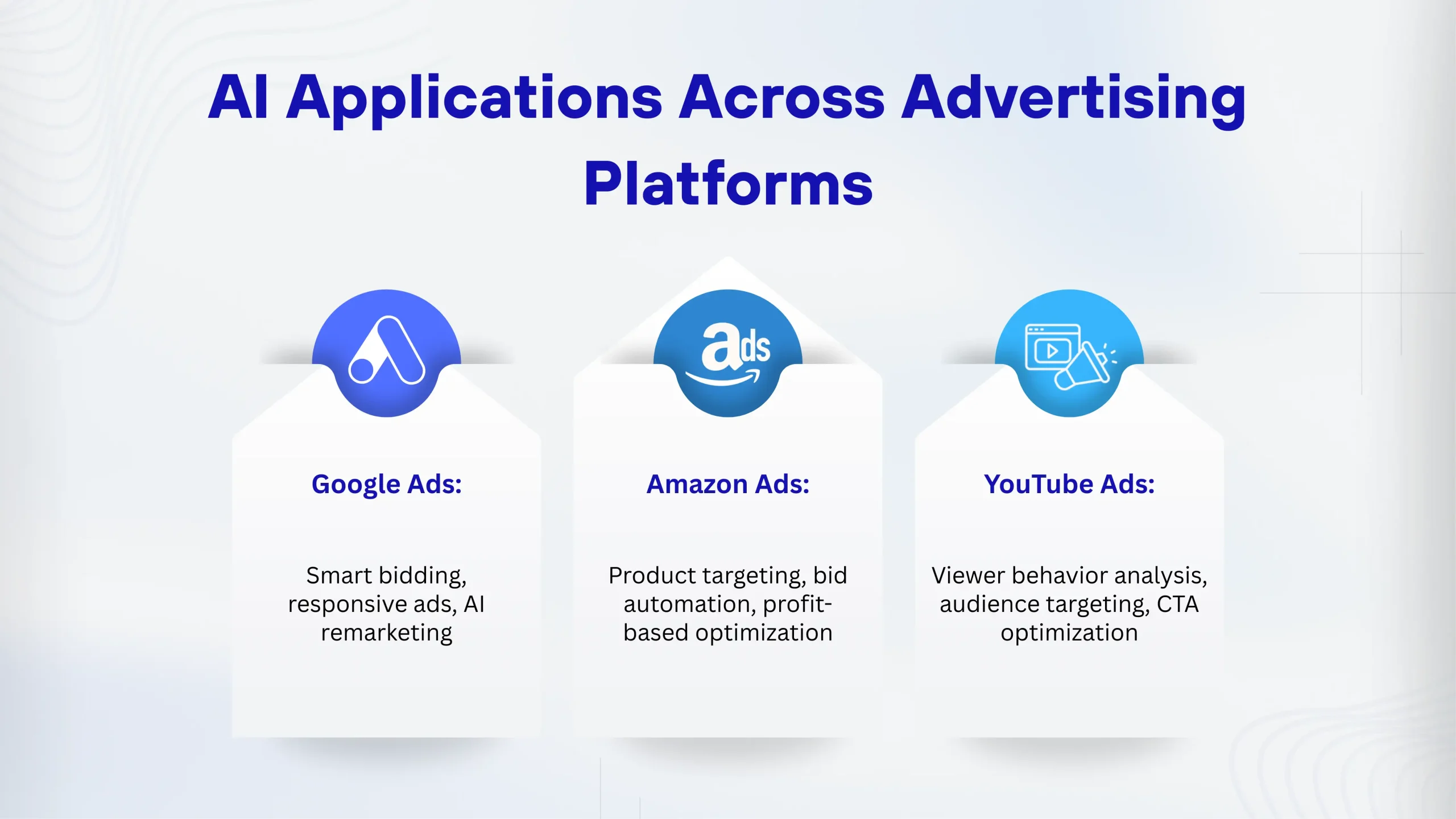
Different platforms use AI in different ways. Let’s break down how it works across the major advertising channels.
Google has integrated AI deeply into its advertising platform. Features like Smart Bidding, Responsive Search Ads, and Performance Max campaigns all use machine learning to optimize your ads.
When you work with a Google Ads Agency that understands these AI features, they can set up campaigns that learn and improve automatically. For example, Responsive Search Ads let you provide multiple headlines and descriptions. Google’s AI then tests different combinations and shows the versions that perform best for each search query.
Google Ads remarketing has also gotten smarter with AI. Instead of just showing ads to everyone who visited your site, AI identifies which previous visitors are most likely to convert and focuses the budget there.
For eCommerce businesses, an Amazon PPC agency using AI tools can make a huge difference. Amazon’s algorithm is incredibly competitive, and manual management simply can’t keep up.
AI helps with product targeting, identifying which competitor products to show your ads alongside, optimizing bids based on time of day and day of week, and adjusting strategy based on inventory levels and profit margins.
YouTube advertising services benefit from AI in unique ways. Video ads require different optimization strategies than text ads. AI analyzes which videos people watch before seeing your ad, how long they watch your ad before skipping, what demographics engage most, and which calls-to-action drive the most conversions.
This data helps create more targeted campaigns that reach people who are actually interested in what you’re offering.
Here’s where we need to be clear about something. AI is great at optimization, but humans are still better at creativity and understanding emotions.
A Content Marketing Agency might use AI to identify which topics are trending and which keywords to target. But the actual creation of compelling content still requires human writers who understand your brand voice and can connect with your audience emotionally.
Similarly, Infographics & Motion Graphics need human designers who understand visual communication and brand identity. AI can suggest what topics to cover based on search trends, but it can’t replace the creative vision that makes content stand out.
Professional Web Video Production involves storytelling, emotional resonance, and brand consistency that AI can’t replicate. What AI can do is help identify which video topics will perform well and how to optimize video ad campaigns for maximum reach.
The sweet spot is combining AI’s analytical power with human creativity.
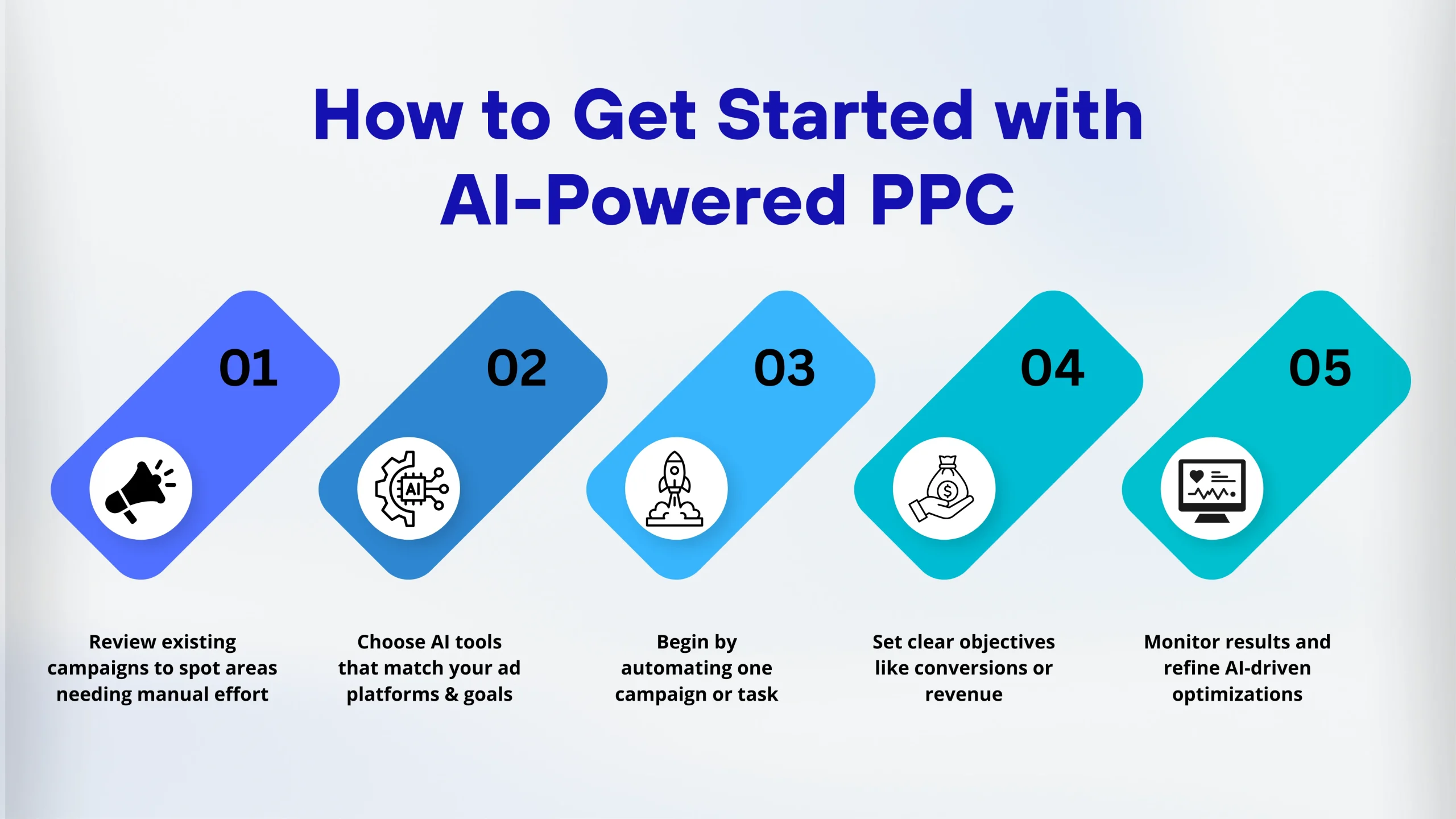
Ready to bring AI into your advertising strategy? Here’s a practical roadmap:
Look at your existing campaigns. What’s working? What’s not? Where are you spending the most time on manual adjustments? These pain points are often where AI can help most.
There are many AI PPC automation tools available. Some are built into advertising platforms (like Google’s Smart Bidding), while others are third-party solutions that work across multiple platforms. Your choice depends on which platforms you advertise on, your budget, how complex your campaigns are, and whether you need cross-platform management.
Don’t overhaul everything at once. Pick one campaign or one aspect of your PPC management to automate first. This lets you learn how the AI works and build confidence before expanding.
AI needs to know what success looks like. Are you optimizing for conversions, revenue, leads, or something else? Be specific about your goals so the AI can optimize accordingly.
AI isn’t “set it and forget it.” You still need to monitor performance, review what the AI is doing, and provide feedback. Think of yourself as the manager and the AI as your employee. You’re still in charge.
I’ve seen businesses make these mistakes when implementing AI-Driven PPC Campaigns:
AI needs data to learn. Give it at least a few weeks to gather information and start optimizing effectively.
AI should augment human decision-making, not replace it entirely. Keep monitoring your campaigns and be ready to step in if something seems off.
AI optimizes based on the goals you set. If those goals don’t align with your actual business objectives, you’ll optimize for the wrong things.
No amount of AI optimization can fix bad ad copy or weak offers. You still need compelling creative that resonates with your audience.
AI works best when it has multiple options to test. Provide various ad copies, images, and targeting options so the AI can identify what works best.
For agencies, White Label PPC services that incorporate AI are becoming increasingly popular. Smaller agencies can partner with larger providers who have invested heavily in AI PPC automation tools. This lets them offer sophisticated PPC management to their clients without building the technology infrastructure themselves.
This model works because the AI handles the technical optimization while the agency focuses on client relationships, strategy, and creative direction. It’s a win-win situation.
The technology keeps evolving. Here’s what’s coming:
Better predictive capabilities that forecast market changes before they happen, more sophisticated audience insights that go beyond basic demographics, automated creative testing that identifies which images and messages resonate most, voice search optimization as more people use voice assistants, and cross-channel coordination where AI optimizes your entire marketing mix, not just individual platforms.
Businesses that start adopting AI in PPC now will have a significant advantage as these capabilities roll out.
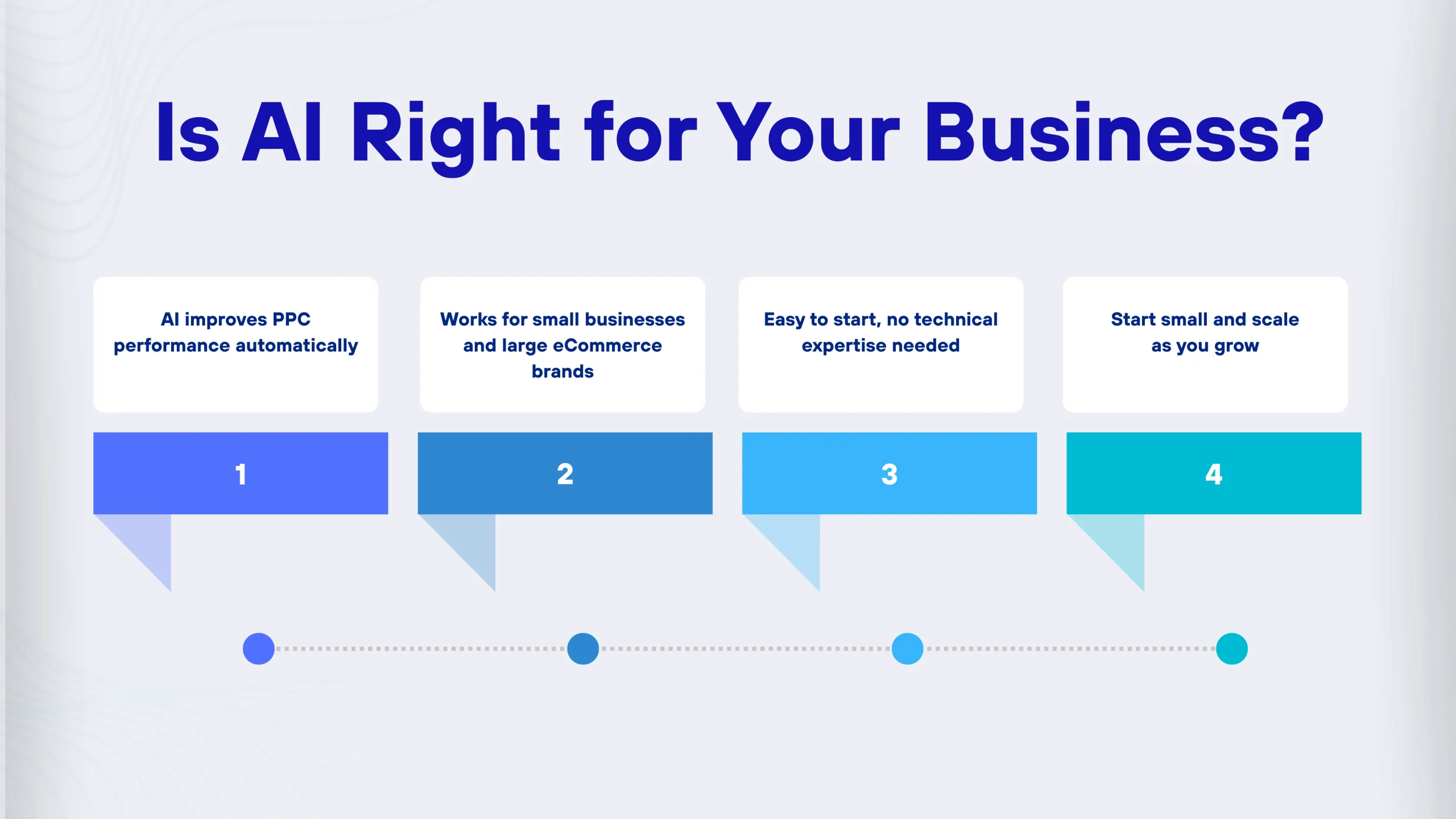
If you’re running paid advertising campaigns, AI can probably help you. The question isn’t whether to use it, but how to implement it effectively.
For small businesses doing local PPC, even basic AI tools built into Google Ads can make a difference. For larger eCommerce operations, sophisticated AI PPC Management systems can handle complex multi-platform campaigns.
The key is starting somewhere and learning as you go. You don’t need to understand all the technical details of how neural networks work. You just need to understand what AI can do for your campaigns and how to use it effectively.
If you’re managing campaigns yourself, consider experimenting with the AI features already built into your advertising platforms. They’re often free and can deliver real improvements.
If you’re working with a Paid Advertising Agency, ask them about their AI capabilities. How are they using automation? What tools do they have access to? How do they combine AI optimization with human expertise?
The future of PPC isn’t human versus AI. It’s humans and AI working together, each doing what they do best.
No, AI won’t replace human PPC managers. Instead, it changes what they focus on. AI handles repetitive optimization tasks like bid adjustments and budget allocation, while humans focus on strategy, creative direction, and understanding business goals. Think of AI as a tool that makes good PPC managers even better, not a replacement for their expertise.
The cost varies widely. Some AI features are built into advertising platforms like Google Ads at no extra charge. Third-party AI PPC automation tools typically range from $500 to several thousand dollars monthly, depending on your ad spend and complexity. Many PPC management services include AI tools in their standard packages, so you’re getting the technology as part of their overall service fee.
AI needs data to learn and optimize effectively. Most businesses start seeing improvements within 2-4 weeks, with more significant results appearing after 2-3 months. The timeline depends on your campaign volume, how much historical data exists, and how well your campaigns were set up initially. Patience is important because AI gets smarter over time.
Absolutely. Even small businesses benefit from AI in PPC. Google’s Smart Bidding and other built-in AI features work regardless of budget size. In fact, smaller budgets benefit even more from AI optimization because there’s less room for wasted spending. You don’t need massive campaigns to see value from AI automation tools.
Not at all. You always maintain control over your campaigns. AI works within the parameters you set, including maximum bids, budget limits, targeting restrictions, and campaign goals. You can override AI decisions anytime and adjust settings as needed. Think of it as having a smart assistant who makes suggestions and handles routine tasks, but you’re still the boss.
Vedanshi
2026-10-09
7 min read
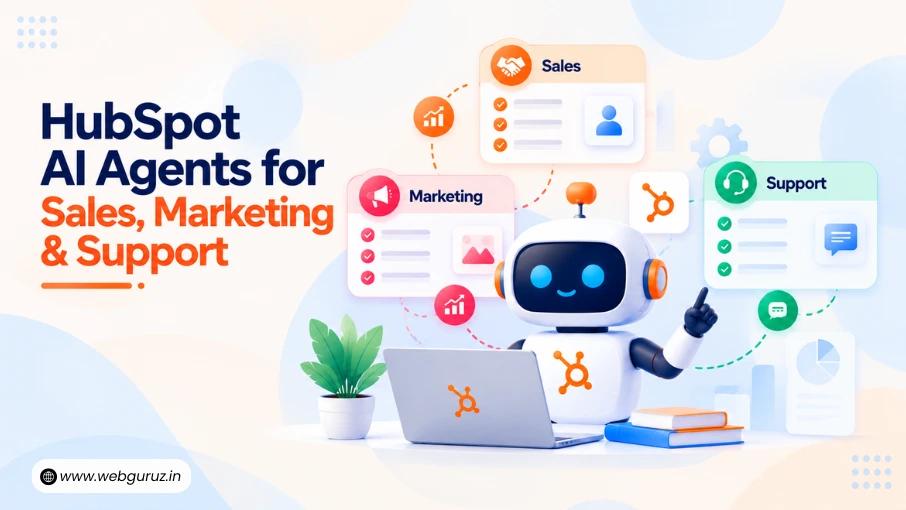
A sales team spends hours researching prospects. Marketing repeats the same tasks across campaigns.
Read More
Vedanshi
2026-10-07
7 min read
HubSpot UNBOUND 2026 sent a clear message to businesses: growth is becoming more connected.
Read More
Vedanshi
2026-10-07
7 min read
For years, ranking on Google’s first page was one of the clearest goals in search marketing. But search is no longer limited to a list of blue links.
Read More