 sales@webguruz.in
 +1 (213) 715-5368
Vedanshi
2026-10-23
7 min read
Custom HubSpot Integrations: Benefits, Examples, and Best Practices
Your business uses HubSpot to manage customer relationships, but disconnected systems create data issues.
Read More
Published On:2026-07-01
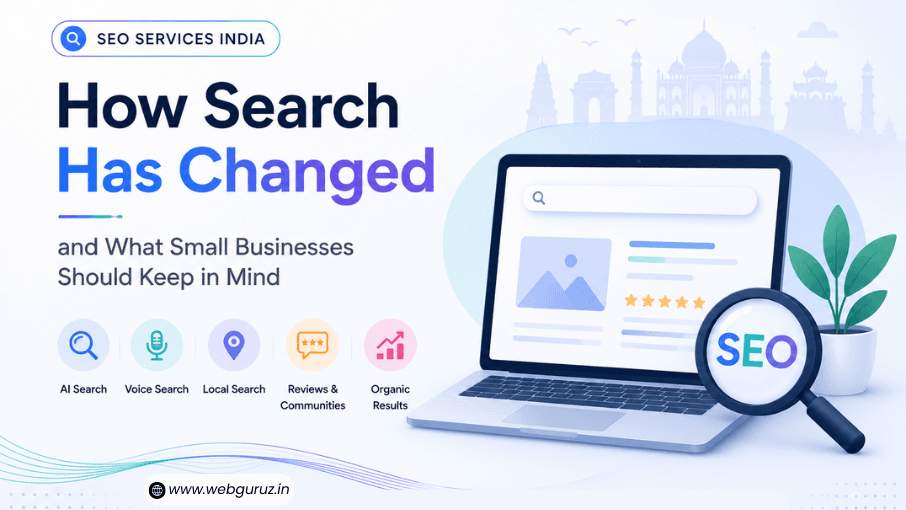
For years, SEO followed a fairly simple formula.
Find the right keywords. Publish optimized content. Build backlinks. Climb the Google rankings.
While those fundamentals still matter, the way people search has changed dramatically.
Today, someone might ask ChatGPT for recommendations, watch a YouTube review, read Reddit discussions, check Google Maps, and only then visit a company’s website. Search is no longer limited to Google’s results page, and businesses need to adapt.
That’s why modern SEO Services India focus on much more than improving rankings. The goal is to help businesses become visible wherever customers are searching, whether that’s Google, AI-powered search tools, voice assistants, maps, or social platforms.
In this guide, we’ll explore how search has evolved, the trends shaping SEO in 2026, and the strategies businesses should focus on to stay competitive.
Think about the last time you searched for something online.
Did you only use Google?
Probably not.
You may have:
This shift in behavior is changing SEO.
People want quick, trustworthy answers without visiting dozens of websites. AI assistants summarize information, voice search provides direct responses, and local searches prioritize businesses that are easy to find.
For businesses, that means one thing:
SEO is no longer just about ranking. It’s about being visible wherever customers are looking for answers.
Many business owners believe that ranking first on Google automatically leads to more inquiries
Unfortunately, that’s not always true.
Imagine two plumbing companies.
Company A ranks #1 for “emergency plumber.” Their website is slow, difficult to navigate, and doesn’t clearly explain their services.
Company B ranks #3 but has helpful content, customer reviews, transparent pricing, and a simple online booking form.
Which company would you trust?
For most people, it’s Company B.
That’s because modern SEO isn’t just about attracting visitors. It’s about creating a website that builds confidence and makes it easy for customers to take the next step.
Higher rankings matter, but they’re only one part of the customer journey.

One of the biggest changes in SEO isn’t Google’s algorithm.
It’s the way people make buying decisions
A few years ago, someone might have searched Google, clicked a website, and contacted the business.
Today, the journey is much less direct.
Google is no longer always the first step.
Sometimes it’s the final step before a customer decides to call, book a demo, or request a quote.
This is why businesses need a broader SEO strategy. Instead of optimizing for one search engine, they need to build trust across the entire customer journey.
You may have even seen phrases like “add me to search 2026” becoming popular online. While the wording varies, the message is clear: businesses want to know how they can be discovered across today’s evolving search landscape, not just on a single search engine.
Not long ago, SEO was largely about matching keywords.
If someone searched for “running shoes,” websites tried to repeat those words throughout a page.
Search engines have become much smarter.
Today, they try to understand why someone is searching, not just what they typed.
Consider these two searches:
The second search tells a much bigger story.
That person isn’t looking for a definition. They’re looking for advice, possible causes, and maybe even product recommendations.
This is one reason Pain Point SEO has become such an effective strategy.
Instead of creating content around isolated keywords, businesses create content that answers the real questions and challenges their customers face.
| Traditional Keyword Focus | Pain Point SEO Approach |
|---|---|
| CRM software | Why is my sales team spending hours updating spreadsheets? |
| Accounting software | How can I reduce invoicing mistakes? |
| SEO agency | Why is my website getting traffic but no inquiries? |
| Email marketing | Why are my emails landing in spam folders? |
Notice the difference.
The first column focuses on products.
The second focuses on solving problems.
That’s exactly the kind of helpful content that both search engines and AI assistants increasingly reward.
Businesses working with an experienced organic SEO agency are moving in this direction because it creates content that attracts qualified visitors rather than simply increasing traffic.

SEO hasn’t become more complicated; it has become more connected.
Instead of focusing on a single ranking factor, businesses now need to understand how people discover information across multiple platforms.
Here are five trends shaping modern search.
Google now answers many questions directly on the results page using AI-generated summaries.
This means your content needs to be clear, trustworthy, and well-structured if you want it to be featured.
Ranking is still important, but so is becoming a reliable source that AI can understand and reference.
People are increasingly asking AI assistants for recommendations instead of typing short searches into Google.
Queries like “add me to Google Search 2026” reflect a growing interest in how businesses can improve their visibility in AI-powered search experiences.
Generative Engine Optimization (GEO) focuses on creating content that AI tools can interpret, summarize, and confidently recommend.
Search engines no longer look only at keywords.
They also evaluate whether they understand your business.
Clear branding, consistent business information, author expertise, structured data, and topical authority all help search engines recognize your business as a trusted entity rather than just another website.
More people now search by speaking naturally.
Instead of typing:
“best dentist Delhi”
they ask:
“Who’s the best-rated dentist near me that’s open today?”
This is why Google voice search optimization is becoming increasingly important. Content written in a natural, conversational style is often easier for voice assistants to understand and deliver.
Modern SEO is no longer about convincing search engines that your content deserves to rank.
It’s about proving that your content genuinely helps people.
Businesses that answer customer questions clearly, solve real problems, and provide valuable information are far more likely to earn long-term visibility across Google, AI assistants, and other search platforms.
If search has changed, then SEO strategies need to change too.
Many businesses still invest in services that focus only on rankings and backlinks. While those are still important, they no longer provide the complete picture.
Modern SEO Services India should help your business become visible wherever customers are searching while creating a website that’s fast, trustworthy, and easy to use.
Here’s what a modern SEO strategy should include.
| SEO Service | Why It Matters Today |
|---|---|
| Technical SEO | Improves website speed, security, crawlability, and user experience. |
| Content Strategy | Create useful content that answers real customer questions. |
| Local SEO | Helps your business appear in Google Maps and local search results. |
| AI & GEO Optimization | Makes content easier for AI-powered search tools to understand and recommend. |
| Performance Tracking | Measures inquiries, leads, and business growth, not just rankings. |
Instead of asking, “How many keywords are we ranking for?” businesses should start asking:
Those questions lead to long-term success.

Imagine you’re visiting a new city and need a nearby coffee shop.
Most people won’t type a long search query.
Instead, they’ll open Google Maps or simply follow a dropped pin shared by a friend.
That’s why local visibility has become such an important part of SEO.
Working with an experienced local SEO company helps ensure your business information is accurate across search platforms, making it easier for nearby customers to find you.
But visibility alone isn’t enough.
Once someone visits your website, it needs to load quickly, work well on mobile devices, and provide a smooth experience.
Technical SEO focuses on the foundation of your website, including:
Think of it this way.
Great content is like opening an excellent restaurant. Technical SEO makes sure customers can actually find the front door.
According to Gartner, traditional search engine volume is expected to decline by 25% by 2026 as users increasingly turn to AI assistants and other virtual agents for information. That’s why businesses need an SEO strategy that extends beyond Google.
One of the biggest myths about SEO is that it’s only for large companies with equally large marketing budgets.
The reality is quite different.
In many cases, small businesses benefit the most because SEO helps them compete with bigger brands without relying entirely on paid advertising.
The best SEO Packages for small businesses focus on steady, sustainable growth rather than chasing quick wins.
Instead of trying to rank for hundreds of competitive keywords, they prioritize:
The most effective Small business SEO solutions are tailored to your business goals, industry, and audience rather than following the same template for every company.

Not every SEO agency works the same way.
Some focus only on rankings.
Others focus only on content.
The best providers combine technical expertise with a clear business strategy.
Before choosing an agency, ask questions like:
If you manage multiple brands or run a digital agency, white-label SEO services can also help you scale without increasing your internal workload.
When you’re ready to improve your online visibility, don’t just choose the cheapest provider.
Hire SEO experts who understand how modern search works and can build a strategy that supports long-term business growth.
Use this quick checklist to see whether your current SEO strategy is keeping up with today’s search landscape.
If you answered “No” to several of these questions, it may be time to review your current SEO strategy.
SEO isn’t disappearing.
It’s evolving.
Customers now discover businesses through Google, AI assistants, voice search, Google Maps, online communities, and social platforms, all before they make a buying decision.
The businesses that succeed won’t be the ones chasing every algorithm update.
They’ll be the ones creating genuinely helpful content, solving customer problems, and making it easy for both people and AI to understand what they offer.
That’s what modern SEO Services are really about.
Not just helping you rank.
Helping your business become visible, trusted, and chosen wherever your customers are searching.
Good SEO packages for small businesses should improve much more than your rankings. They should strengthen your website, improve local visibility, create helpful content, and generate qualified leads over time. The best packages focus on sustainable business growth rather than quick wins.
The right SEO solutions (especially if you are a small business) depend on your goals. Local businesses often benefit from Google Business Profile optimization and local SEO, while businesses targeting a wider audience usually need stronger content strategies and technical SEO. A customized approach almost always delivers better long-term results than a one-size-fits-all package.
Yes. The best small business SEO services help you attract people who are already searching for your products or services. While SEO takes time, it often delivers long-term value by generating consistent organic traffic, qualified inquiries, and stronger brand visibility.
Every business has different goals, competition, and technical requirements. Some packages cover only the basics, while others include technical improvements, content creation, local SEO, and ongoing optimization. Instead of comparing prices alone, compare the value and expertise included.
Absolutely. Small businesses often succeed by focusing on niche markets, local searches, and helpful content. A well-planned SEO strategy allows smaller companies to compete for valuable searches without needing the same marketing budget as larger competitors.

Vedanshi
2026-10-23
7 min read
Your business uses HubSpot to manage customer relationships, but disconnected systems create data issues.
Read More
Vedanshi
2026-10-22
7 min read
Ask ChatGPT, Gemini, or Perplexity to recommend a supplier or a software tool, and you get a short list of names, not ten blue links.
Read More
Vedanshi
2026-10-21
7 min read
Building a website takes more than picking colors, dropping in images, and writing copy.
Read More