 sales@webguruz.in
 +1 (213) 715-5368
Vedanshi
2026-10-23
7 min read
Custom HubSpot Integrations: Benefits, Examples, and Best Practices
Your business uses HubSpot to manage customer relationships, but disconnected systems create data issues.
Read More
Published On:2026-08-10
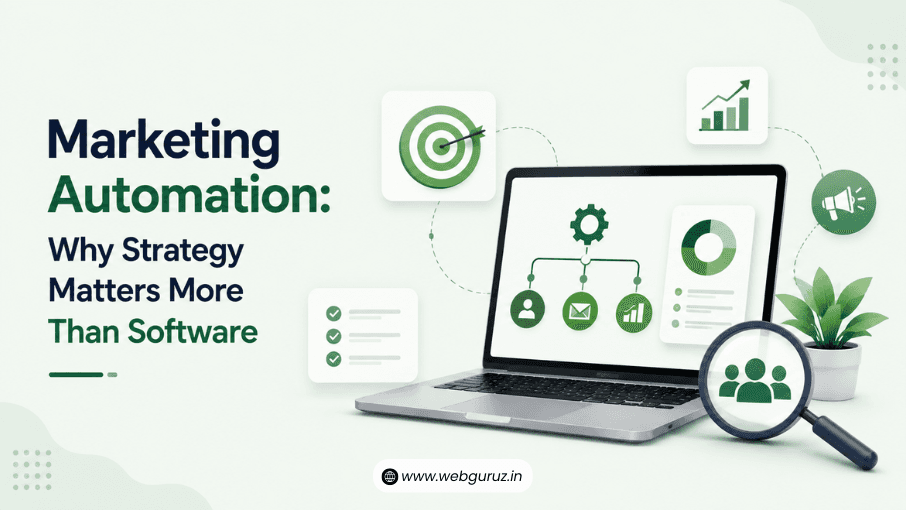
For many businesses, marketing automation starts with good intentions. They invest in a new platform, build a few email workflows, schedule campaigns, and expect leads to turn into customers automatically. But after a few months, the results often fall short of expectations.
The problem usually isn’t the software. It’s the strategy behind it. It’s about creating connected customer journeys that deliver the right message to the right person, at the right time. When automation is built around clear business goals and customer needs, it becomes a powerful tool for improving efficiency, increasing conversions, and strengthening customer relationships.
In this guide, we’ll explore why strategy should come before technology, the common elements of successful automation, and how businesses can build systems that continue delivering value as they grow.
Modern marketing platforms offer impressive capabilities, from email automation and lead scoring to customer segmentation and analytics. However, simply having access to these features doesn’t guarantee better outcomes.
If you’re just beginning your automation journey, our Marketing Automation Guide explains the fundamentals of building automated workflows and supporting business growth. This article takes the next step by focusing on why strategy is the foundation of every successful automation initiative, regardless of the platform you choose.
Many businesses struggle because they begin by asking:
“Which automation platform should we buy?”
A better question is:
“What business problem are we trying to solve?”
Your answer might be:
Once these goals are clear, choosing the right automation platform becomes much easier.
Before creating workflows, take a step back and understand how customers move through your business.
Ask yourself:
Answering these questions helps you build automation that supports customers at every stage instead of sending generic messages.
A simple customer journey might look like this:
| Customer Stage | Customer Needs | Automation Opportunity |
|---|---|---|
| Awareness | Learn about a problem | Educational emails and helpful content |
| Consideration | Compare available solutions | Case studies, guides, and product information |
| Decision | Build confidence | Personalized follow-ups and demo invitations |
| Purchase | Complete the buying process | Welcome emails and onboarding workflows |
| Retention | Continue receiving value | Customer education, support, and upsell campaigns |
When automation follows the customer journey, every interaction feels more relevant and valuable.
Before automating anything, make sure your business processes are clear.
If your sales and marketing teams follow different processes, automation will only make those problems happen faster.
Start by asking simple questions:
Once your processes are clear, building effective workflows becomes much easier. Good automation improves a strong process; it doesn’t fix a broken one

Not every business needs the same automation strategy.
A small business focused on lead generation will have different priorities than an enterprise managing thousands of customer interactions every day.
That’s why choosing the right Marketing Automation Solutions starts with understanding your goals rather than comparing feature lists.
For example:
The best automation solutions simplify work instead of adding unnecessary complexity.
Businesses should also consider whether their chosen platform can integrate with CRM systems, reporting tools, customer support software, and future business applications. A connected technology stack creates better customer experiences while reducing manual work for internal teams.
Marketing automation is much more than building email campaigns. It involves customer journey mapping, CRM integration, lead management, reporting, data quality, and ongoing optimization.
This is why many organizations choose to work with experienced Marketing Automation Experts rather than trying to build everything internally.
An experienced team helps businesses:
Many businesses also work with dedicated marketing automation specialists who understand how to configure platforms, troubleshoot technical issues, and continuously improve campaign performance as customer needs evolve.
Rather than simply implementing software, experienced specialists help businesses build automation systems that continue delivering value long after the initial launch.
One of the biggest misconceptions about automation is that success is measured by email opens and clicks alone. While these metrics are useful, they don’t tell the whole story.
Effective marketing automation should contribute to real business outcomes, such as generating qualified leads, shortening sales cycles, improving customer retention, and increasing revenue.
Some valuable metrics to monitor include:
According to Salesforce’s State of Marketing report, high-performing marketing teams are significantly more likely to use automation to deliver personalized customer experiences across the entire customer journey rather than relying on one-off campaigns.
Businesses investing in enterprise platforms often work with experienced Marketo Consulting Services providers to build meaningful reporting dashboards, optimize campaigns, and ensure their automation efforts are driving measurable business results rather than simply improving engagement metrics.
Regularly reviewing these metrics allows businesses to refine their workflows, remove bottlenecks, and improve performance over time.
Even with the right platform, poor planning can prevent businesses from getting the results they expect.
Some of the most common Marketing Automation Mistakes include:
The most successful businesses treat automation as an ongoing strategy rather than a one-time project. They regularly review customer behavior, update workflows, and improve messaging based on real data instead of assumptions.

Marketing automation delivers the best results when marketing, sales, and customer success work toward the same goals.
This is where RevOps Consulting Services become valuable.
Revenue Operations (RevOps) connects teams, technology, and processes so customer information flows smoothly throughout the business. Instead of operating in separate systems, marketing and sales share the same data, helping teams respond faster and create a more consistent customer experience.
For example, when a lead downloads a guide, attends a webinar, and requests a demo, automation can instantly notify the sales team with complete engagement history. This reduces manual work, improves follow-ups, and creates a smoother buying experience.
By combining marketing automation with a strong RevOps strategy, businesses can eliminate silos, improve collaboration, and make better decisions using shared data.
Every business has unique goals, which means there isn’t a one-size-fits-all automation platform.
Some organizations benefit from Pardot Consulting Services (Salesforce Marketing Cloud Account Engagement) because they need advanced B2B lead nurturing, CRM integration, and sales alignment. Others may choose Marketo Consulting Services for its powerful enterprise marketing capabilities, advanced segmentation, and campaign management.
The right platform depends on factors such as:
Rather than selecting software based on popularity, businesses should focus on choosing a platform that supports both their current needs and future growth.
Launching automated workflows is only the first step. As customer needs and business goals change, your automation should change too.
Review your workflows regularly to see what’s working and what can be improved. Small updates, like refining customer journeys, improving email content, or adjusting audience segments, can make a big difference over time.
Marketing automation delivers the best results when it’s treated as an ongoing strategy, not a one-time setup.
Successful marketing automation isn’t defined by the number of workflows you build or emails you send. It’s defined by how well your strategy supports your customers and your business goals.
When businesses combine clear processes, connected customer journeys, the right automation solutions, and ongoing optimization, automation becomes a powerful driver of growth rather than just another marketing tool.
Whether you’re working with experienced experts, exploring platform-specific solutions, or aligning your teams through RevOps Consulting Services, putting strategy before software helps create automation that continues delivering value long after implementation. The businesses that succeed aren’t the ones with the most automation; they’re the ones using it with purpose.
Marketing automation uses software to automate repetitive marketing tasks such as email campaigns, lead nurturing, customer segmentation, and follow-ups. When built around a clear strategy, it helps businesses improve efficiency and create better customer experiences.
If your team spends a lot of time on repetitive marketing tasks, struggles to follow up with leads consistently, or finds it difficult to personalize customer communication, marketing automation can help streamline these processes and improve results.
Marketing Automation Solutions help businesses nurture leads, automate customer journeys, improve collaboration between marketing and sales, and provide valuable insights that support better decision-making and higher conversion rates.
The right platform depends on your business goals, existing technology, and marketing strategy. Pardot is often a strong choice for businesses using Salesforce, while Marketo is well suited for organizations managing complex enterprise marketing campaigns.
Marketing Automation Experts help businesses develop a clear strategy, implement the right platform, optimize customer journeys, integrate marketing with CRM systems, and continuously improve automation based on performance and business goals.
Vedanshi
2026-10-23
7 min read
Your business uses HubSpot to manage customer relationships, but disconnected systems create data issues.
Read More
Vedanshi
2026-10-22
7 min read
Ask ChatGPT, Gemini, or Perplexity to recommend a supplier or a software tool, and you get a short list of names, not ten blue links.
Read More
Vedanshi
2026-10-21
7 min read
Building a website takes more than picking colors, dropping in images, and writing copy.
Read More