 sales@webguruz.in
 +1 (213) 715-5368

HubSpot's annual flagship gathering entered a new chapter in 2026 as INBOUND became UNBOUND, reflecting a broader change in how businesses approach growth.
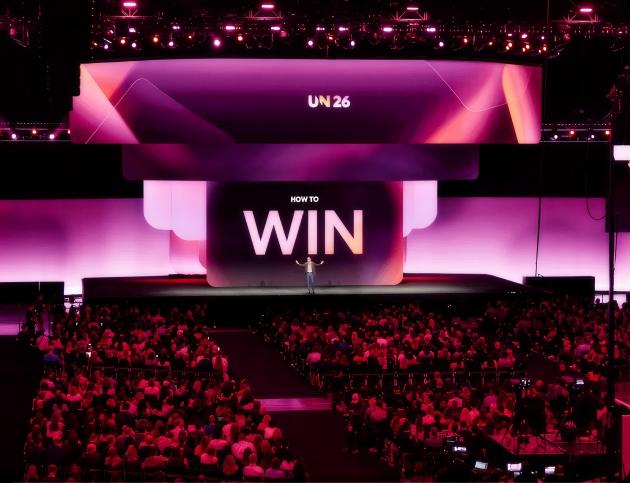
Held in Boston from September 16-18, UNBOUND 2026 brought together discussions around artificial intelligence, customer data, CRM, marketing, sales, service, creativity, brand building and go-to-market strategy. But the event went beyond new AI announcements and product launches.
Across HubSpot's product announcements and the sessions throughout the three-day program, a larger shift became clear: AI is moving from an individual productivity tool toward a connected layer across business operations.
UNBOUND 2026 reflected that expanded scope through both HubSpot's product roadmap and a wide range of sessions focused on what businesses need to change as AI becomes more deeply embedded in everyday work.
The essential context
Biggest product theme: AI powered by business context
Major HubSpot launches: Growth Context, Smart CRM, Context Home, Breeze Assistant and Marketing Studio
Major marketing shift: From traffic-centric inbound to AI-era discovery and AEO
Enterprise AI theme: Agents require context, governance, security and observability
Creative theme: As production becomes cheaper, judgment and taste become more valuable
Broader takeaway: AI is increasingly becoming an operating layer across the business
A new chapter of growth
INBOUND
UNBOUND
The move from INBOUND to UNBOUND was more than a branding change.
HubSpot's explanation is that the original INBOUND methodology was created for a very different growth environment. Its principles (creating value, earning attention, building trust and putting customers first) remain relevant, but the environment around them has changed.
Today, HubSpot describes growth as something that extends across marketing, sales, service and operations rather than sitting within a single department. Buyer journeys are less predictable, traffic patterns are changing, and AI can influence discovery before a potential customer ever visits a company's website. (Unbound Marketing Event)
That helps explain the new name.
INBOUND established the foundation. UNBOUND is intended to represent a broader approach to growth that is more connected, iterative and AI-driven.
The distinction also appeared throughout the programming. Instead of focusing exclusively on content marketing and inbound demand generation, the sessions addressed enterprise AI, CRM data, AEO, customer experience, advertising, brand building, workflow redesign, creativity, sales and organizational change.
In that sense, the change from INBOUND to UNBOUND provides useful context for understanding everything else announced and discussed during the three days.

02 / The product roadmap
05
Connected developments
The biggest product story at UNBOUND centered on one idea: AI becomes more useful when it understands the business around it.
HubSpot introduced several major developments around this concept, including Growth Context, a self-updating Smart CRM, Context Home, a rebuilt Breeze Assistant and Marketing Studio. (HubSpot)
HubSpot introduced Growth Context as the combination of business, customer and team context available to its platform.
The idea addresses a problem that surfaced repeatedly throughout UNBOUND: AI models can be capable of performing many tasks, but their usefulness depends heavily on the information surrounding those tasks.
A model may be able to write an email, analyze a customer record or create a campaign. But without information about the company's goals, customers, previous interactions, internal processes and business priorities, the output may remain generic.
HubSpot's approach is to make this context a foundational layer of the platform.
The company's Fall 2026 product announcement describes Growth Context as information about a company's customers, team and business that can be used to improve AI-driven outcomes. HubSpot also reported that businesses with stronger Growth Context generated 3.6 times more MQLs, won 3.2 times more deals and closed more than twice as many tickets. These are HubSpot's own reported figures rather than independent measurements. (HubSpot)
The larger point is important: context is being treated as infrastructure rather than simply background information.
Another major announcement was HubSpot's self-updating Smart CRM.
HubSpot says the system is designed to automatically capture and sync calls, emails and meetings, reducing the amount of manual data entry required to keep customer records current. (HubSpot)
This matters because outdated CRM data has always created a problem for automation.
If customer records are incomplete, AI systems have less reliable information to work with. An agent may technically have access to a CRM but still lack the context needed to make a useful decision.
The self-updating CRM therefore connects directly to the broader Growth Context strategy: keep the underlying customer information current so AI-driven actions are based on a more complete picture.
HubSpot also introduced Context Home, designed to give teams a centralized view of their available business context.
The system includes a context score intended to show how complete the underlying context foundation is and where information gaps exist. (HubSpot)
This represents a notable change in how CRM infrastructure is being positioned.
Historically, CRM systems have largely been viewed as places to store customer records and track interactions. The direction presented at UNBOUND positions CRM data as something that can actively influence how AI systems reason, personalize, recommend and execute.
The Breeze Assistant was another major part of HubSpot's announcements.
Rather than positioning the assistant simply as a question-and-answer interface, HubSpot presented it as a conversational layer that can orchestrate tools, assign agents, create outputs and execute workflows using the context available within the platform. (HubSpot)
During the HubSpot Spotlight session, examples showed how different users could work with Breeze to diagnose pipeline problems, develop campaign strategies, create assets, launch and nurture campaigns, analyze closed-lost opportunities, and support sales activities.
The underlying change is from asking AI for information to directing AI to complete work.
That distinction is becoming increasingly important as businesses move from experimentation toward operational AI.
HubSpot also introduced Marketing Studio, a shared workspace designed to help marketing teams move from identifying opportunities to executing campaigns and demand-generation activities.
The platform connects insights with actions such as campaign development, content creation and nurturing. HubSpot also presented specialized AI agents including the Campaign Agent, Content Agent and Nurture Agent (HubSpot).
This is another example of the broader direction visible throughout UNBOUND: instead of adding isolated AI features to individual tools, platforms are increasingly attempting to connect data, planning, execution and measurement.
03 / Beyond the launches
03
Themes shaping business
UNBOUND 2026 brought together discussions that went well beyond HubSpot's product announcements. Across the event, speakers examined how AI is changing business operations, marketing, search, creativity, sales and the way teams work.
Here's a quick breakdown.
Only 6% of
6,000
companies reported transformational results from AI
One of the clearest themes at UNBOUND 2026 was the gap between using AI and actually changing how a business operates.
During the HubSpot Spotlight, Yamini Rangan pointed to data from 6,000 companies showing that AI adoption is already widespread, but only 6% reported transformational results. The discussion also suggested that adding more tools, models and agents does not automatically translate into better business outcomes.
Dharmesh Shah made a similar point in his session, Growing Better in the Age of the Builder. Rather than focusing on the newest or most powerful model, he encouraged businesses to start with the outcome they want AI to improve. His approach was simple: define the metric first, then choose the technology that can help move it.
That represents an important change in how companies can approach AI. The question is moving from “What can this model do?” to “What business problem should this solve?”
Moving from individual experiments to enterprise-wide AI creates a different set of challenges.
In The Hard Part: Scaling AI Across the Enterprise, the discussion focused on companies moving beyond isolated pilots toward formal agent roadmaps. As organizations deploy more agents across functions, issues such as duplication, permissions, security, context, governance and cost become harder to manage.
Context is particularly important. An agent may have access to a powerful model, but that does not mean it understands the company's processes, customer history or internal knowledge. Enterprise AI therefore requires more than model access. It requires the systems and controls that allow AI to operate safely and usefully within the business.
The challenge also grows as more employees begin building their own AI workflows. Organizations need enough flexibility for teams to experiment while still maintaining visibility, security and cost controls.
Workflow redesign
Not just faster work. Better ways of working.
Another discussion pushed the idea further: businesses should not simply add AI to workflows that were already inefficient.
In You're Doing AI Wrong. So Were We, Richard Seroter argued that organizations should reconsider the entire workflow before deciding what to automate. That can mean removing unnecessary steps, reducing handoffs and using agents to handle work in parallel rather than simply speeding up the same sequence of tasks.
The session also highlighted the difference between human-in-the-loop and human-on-the-loop approaches. The appropriate level of human oversight can depend on the risk involved, but people still need to remain accountable for important AI outputs.
That changes how AI success should be measured. Instead of focusing on how much AI-generated work a team produces, businesses can look at outcomes such as cycle-time reduction, customer satisfaction, operational efficiency and the amount of meaningful work teams are able to take on.

AI is also changing how sales and go-to-market teams think about their roles.
In What Today's Winning GTM Leaders Do Differently, Mark Roberge and Michael Hartman discussed how AI can reduce time spent on repetitive work while giving employees more opportunity to focus on customers, partners and higher-value decisions. The discussion also emphasized that AI adoption is not simply a technology project. Change management, employee concerns and responsible rollout can be significant challenges.
Hartman described Anthropic's internal approach as one where employees use AI alongside existing software rather than replacing the entire technology stack with autonomous systems. Employees can also create and share AI skills from the bottom up, allowing useful workflows to spread across teams.
The broader implication is that AI may change tasks and responsibilities before it changes entire job categories. Domain knowledge and human judgment remain important as teams move toward more AI-assisted workflows.

The importance of context appeared again in From Data Strategy to AI Execution.
Tasso Argyros argued that many current AI systems are capable enough to perform complex tasks but often lack the business and customer context needed to perform them effectively. That context includes customer data, business strategy, product priorities and even the reasoning behind decisions that may otherwise remain undocumented.
Fragmented technology stacks can make this harder. When information is spread across multiple point solutions, agents may struggle to understand where relevant information lives or how different systems connect.
The discussion therefore emphasized centralized data and connected platforms as an important foundation for AI execution. The role of employees also changes in this model: rather than handling every task themselves, they increasingly define strategy, set boundaries, evaluate agent performance and improve the context available to AI.
AI at enterprise scale
As AI systems become more autonomous, businesses also need to understand what those systems are doing and why.
The enterprise discussions at UNBOUND highlighted the need for governance, permissions, monitoring and clear responsibility as organizations deploy agents at scale. Security and context are not separate concerns from AI performance; they become part of how AI systems are designed and managed.
This also makes observability important. Businesses need ways to test agents, inspect their behavior, understand the information they are using and determine whether their outputs match expectations.
The goal is not necessarily to keep humans involved in every individual task. It is to establish the right level of oversight for the level of risk involved.
Technology is only one part of enterprise AI adoption.
The GTM discussions highlighted the mixed reactions employees can have to AI, ranging from excitement about new capabilities to concerns about changing responsibilities. Hartman described change management as a bigger adoption challenge than the technical implementation itself.
This means organizations also need to invest in skills, experimentation and clear expectations around how AI should be used.
The shift may ultimately require employees to become more comfortable evaluating AI outputs, managing AI-assisted workflows and applying their own domain expertise. As more routine execution moves to software, the ability to question, evaluate and improve the work becomes increasingly important.

04 / Beyond the launches
2.
HubSpot's own experience / May 2024
HubSpot figures presented by Kieran Flanagan and Kipp Bodnar; not independent performance measurements.
Marketing was another area where UNBOUND highlighted a major change.
Kieran Flanagan and Kipp Bodnar pointed to HubSpot's own experience as an example. In May 2024, HubSpot saw website traffic fall by 80%, representing 140 million fewer visits, while leads increased by 20%. The example challenged the assumption that more traffic automatically means better marketing performance.
The broader point was that discovery is becoming more fragmented. Buyers can encounter brands through search, creators, social platforms, AI tools and other channels, while some platforms increasingly keep users within their own environments.
As a result, marketers may need to focus less on traffic volume alone and more on the quality and commercial value of the attention they attract.
The Loop
This changing environment led into the Loop framework presented by Flanagan and Bodnar.
The framework is built around four stages:
Express → Tailor → Amplify → Evolve
The idea is to use AI to increase the speed and scale of marketing while continuing to refine what works. AI can make it easier to produce and personalize content, but the abundance of content creates another problem: sameness.
When everyone has access to similar tools and similar prompts, producing more content does not necessarily make a brand more distinctive.
Flanagan argued that this makes judgment and taste more valuable. Marketers need to decide which ideas are worth developing, which should be rejected and which are distinctive enough to deserve attention.
The Loop therefore represents more than a new content workflow. It reflects a marketing environment where testing, learning and adapting become continuous rather than linear.
AEO
Answer engine optimization
Search is also becoming broader than traditional rankings.
The discussion around Zoom's 90% Problem examined how a company with extremely high brand awareness can still be strongly associated with one particular category. Zoom had to communicate a wider story around its products while adapting to an environment where people increasingly use AI-driven discovery.
Its AEO approach included technical foundations such as structured data, content designed around prompts and questions, and stronger signals of credibility and citation.
The important shift is that visibility can no longer be considered only in terms of where a webpage ranks. Brands also need to consider whether their information can be understood, referenced and surfaced when people ask AI systems questions about their category.

Advertising is changing alongside search and discovery.
In Beyond the Click: AI, Ads, and What's Next, Colin Fleming and Kipp Bodnar discussed how AI is reducing the distance between an idea and a finished marketing asset. At the same time, they argued that AI does not remove the need for marketing judgment. Context, brand understanding and taste remain central to deciding what should actually be created.
The discussion also examined the emergence of advertising within AI interfaces, including ChatGPT Ads and newer possibilities such as sponsored agents. The important shift is that advertising can increasingly appear within a conversation where the user is already expressing a need or intent.
That could change the role of the click itself. Instead of every customer journey beginning with a search result and ending with a website visit, brands may increasingly interact with customers inside the discovery experience itself.
05 / Beyond the launches
3.
Runway / Creative production
AI is making creative production faster, but that does not necessarily make creative work easier.
In Constructing Your Story: AI Tools for Creative Teams, Runway's Alejandro Matamala-Ortiz discussed how individuals can now generate components that previously required much larger production teams. Yet producing individual assets is different from creating a coherent story.
The session emphasized an iterative approach rather than treating AI as a one-click creative solution. As production becomes faster, creative teams can use the time saved to experiment more, test different ideas and develop stronger concepts.
This connects directly with the marketing discussions at UNBOUND: when production becomes easier, the ability to decide what is worth making becomes more important.
New York Liberty / Brand building
The New York Liberty provided a different perspective on growth through its brand-building story.
Shana Stephenson discussed how the organization worked through periods of underinvestment, changes in venue and efforts to build a stronger connection with its audience. The strategy involved preserving traditions while creating new ones, strengthening community connections and building a distinct identity around the team.
The Liberty's growth also included a major expansion in partnerships, from one partner in its earlier period to nearly 60, alongside initiatives such as Liberty Loud.
The example is useful because it shows that brand building is not simply a question of producing more content or automating more marketing. Culture, community and consistency still take time to build.
Legora / Customer proximity
Legora's growth story highlighted another side of AI-driven business building.
Rather than trying to serve the entire legal market immediately, the company worked closely with an early major law-firm customer and embedded itself in the customer's environment. That close relationship helped the team understand legal workflows and shape the product around real problems.
The company also chose not to rush broad onboarding before the product was ready. Its approach combined rapidly advancing AI models with deep customer knowledge and domain expertise.
The lesson is not simply that startups should move quickly. It is that speed has more value when it is combined with proximity to the customer and a clear understanding of the problem being solved.
Human judgment / Differentiation
Across several UNBOUND discussions, creativity repeatedly came back to human judgment.
In the marketing sessions, AI was described as making production increasingly accessible while leaving marketers responsible for deciding what deserves to exist. In the creative sessions, the emphasis was similarly placed on iteration, taste and intent rather than simply generating an output.
Colin Fleming described modern marketing as a combination of deep customer context, increasingly accessible production capabilities and a final layer of judgment and taste.
That distinction matters because AI can produce something that is technically polished without necessarily making it relevant, distinctive or right for the brand.
Vibe / Contextual advertising
The discussion around Vibe showed how AI is also changing advertising production and optimization.
Vibe built a self-serve connected TV platform that gave smaller advertisers more control over TV buying and attribution. Its advertising workflows increasingly use AI-generated creative variations and performance data to test elements such as editing, rhythm and volume.
The broader direction is toward advertising systems that can produce and evaluate large numbers of creative variations while using audience and performance data to improve targeting.
That creates a new balance between scale and control: technology can increase the number of experiments, but businesses still need the strategy and brand understanding that determine what those experiments should be testing.
Suno / Creative collaboration
Suno offered another example of how AI is changing creative participation.
The company has built tools that allow users to create lyrics, melodies and complete musical ideas, while also developing a studio environment for more structured creation. Its approach includes restrictions around prompts that name specific artists, along with measures such as watermarking generated music.
The broader idea is different from simply automating a creative task. AI can become a collaborative medium, allowing people who may not traditionally have had access to professional production tools to participate in the creative process.
That raises a larger question for creative industries: as the technical barrier to production falls, how will artists, brands and audiences redefine their roles in the process?
06 / The broader implications
07
Developments to watch
Taken together, the announcements and discussions at UNBOUND point toward several broader developments.
The focus is shifting from individual AI applications toward systems that connect data, workflows, agents, and decision-making.
HubSpot's Growth Context, Smart CRM, and Breeze Assistant reflect this direction on the platform side, while enterprise sessions showed how organizations are building agent roadmaps across departments.
More powerful models do not automatically produce better business results.
The quality of the context available to those models (customer information, business priorities, historical interactions, internal knowledge and workflow data) increasingly determines how useful their outputs can be.
The HubSpot traffic example and the Loop framework point toward a different measurement environment.
Traffic can still matter, but the relationship between visits and business outcomes is changing.
Marketing teams increasingly need to understand intent, relevance, conversion and revenue rather than treating traffic volume as the primary indicator of success.
AEO reflects an environment where brands need to be understood and referenced by AI systems as well as traditional search engines.
That creates new requirements around technical structure, content, authority, citations and brand presence across multiple sources.
When AI makes production easier, content volume can increase rapidly.
That makes differentiation harder.
The discussions around Runway and AI-era marketing repeatedly returned to taste, judgment, creativity and intent, the elements that help organizations decide what is actually worth producing.
Adding AI to an existing process may create incremental efficiency.
Redesigning the process can create a much larger change.
Several sessions argued for removing unnecessary steps, reducing handoffs, using agents for parallel work and deciding where humans should remain involved.
The sessions did not present a simple picture of humans being removed from business processes.
Instead, many discussions described people moving toward strategy, supervision, evaluation, creativity, customer relationships and decision-making while AI handles more execution.
That makes skills such as judgment, communication, curiosity and domain expertise increasingly important.
07 / Final perspective
HubSpot UNBOUND 2026 was about a broader definition of growth.
The product announcements placed context, CRM data, AI agents and connected workflows at the center of HubSpot's strategy, while the wider sessions examined how AI is changing marketing, sales, enterprise operations, creativity and customer experience.
The common thread was clear: AI can make execution faster, but business value still depends on context, judgment and clear goals.
That makes the shift from INBOUND to UNBOUND more than a name change. It reflects a move toward a more connected, AI-driven approach to how businesses operate and grow.