 sales@webguruz.in
 +1 (213) 715-5368




Connect Shopify with HubSpot to unify customer data, automate marketing, and improve ecommerce growth.
 Sync Customer Data
 Automate Marketing Workflows
 Improve Customer Retention
 Track Ecommerce Revenue
 Personalize Customer Campaigns
 Simplify Store Operations
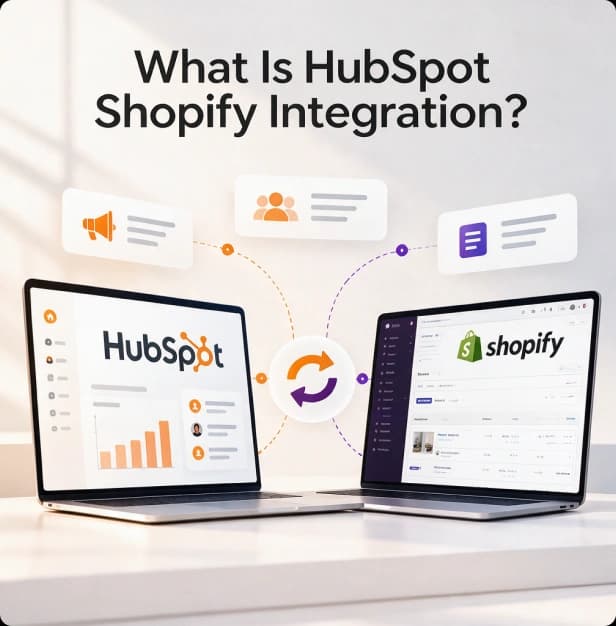
A HubSpot Shopify integration connects your online store with your CRM and marketing platform. It helps businesses bring customer, order, and purchase information together to support personalized marketing, customer segmentation, reporting, and lifecycle management.
Businesses integrate HubSpot with Shopify to connect store activity with customer engagement, automate post-purchase communication, and build stronger relationships with existing customers.
When ecommerce data and CRM records sit in separate platforms, businesses can struggle to build complete customer profiles. Purchase history and order activity may remain in Shopify, while marketing engagement and lifecycle information stay in HubSpot. This makes it harder to personalize campaigns and identify opportunities for repeat purchases.

WebGuruz helps businesses connect these systems so teams can work with more consistent customer information and make better decisions throughout the ecommerce lifecycle.
Connect customer records, purchase history, and marketing engagement to create a more complete view of each shopper.
Align customer, order, and lifecycle information between HubSpot and Shopify based on your integration requirements.
Understand how customers move from their first interaction to purchase and repeat orders.
Group customers based on purchase history, order value, lifecycle stage, and engagement activity.
Reduce repetitive data entry by automating customer and order data transfers where supported by your integration setup.
Bring ecommerce and CRM information together to support reporting, personalized communication, and business growth.
Getting a new customer is only one part of ecommerce growth. Businesses also need to encourage repeat purchases, follow up after orders, and re-engage inactive customers. Without connected customer and purchase data, marketing campaigns can become generic and important follow-ups may be missed.
WebGuruz helps align Shopify activity with HubSpot workflows so businesses can create relevant lifecycle campaigns, support abandoned cart recovery, and improve customer retention. The available automation depends on the connected data, HubSpot subscription, and workflow configuration.

Managing customer records, orders, and marketing data across separate platforms can take up valuable time. Manual exports, repeated CRM updates, and disconnected workflows can also lead to inconsistent records.
WebGuruz helps businesses plan and configure ecommerce integration workflows that reduce manual tasks and improve data consistency across Shopify and HubSpot.
Keep customer profiles and contact information aligned across both platforms according to the agreed data mapping.
Connect purchase information with CRM records to improve customer visibility and lifecycle management.
Use available cart activity and configured workflows to support personalized recovery campaigns.
Review existing ecommerce processes to identify repetitive tasks and opportunities for automation.
Connect customer, order, and engagement data to support coordinated marketing activities throughout the customer lifecycle.
Review synchronization rules and workflows as your store, product catalog, and customer base grow.
When ecommerce and CRM data remain disconnected, it can be difficult to understand which marketing efforts generate purchases, repeat customers, and long-term revenue. Teams may see campaign engagement in one platform and order information in another without a clear view of the complete customer journey.
WebGuruz helps align customer data, purchase activity, and marketing reporting to give businesses a clearer view of campaign performance and customer behavior. This supports better-informed marketing decisions and helps teams assess where further analysis or optimization is needed.

Customers respond better to communication that reflects their interests, purchase history, and stage in the buying journey. When Shopify order data and HubSpot customer records are disconnected, businesses may rely on generic campaigns that miss opportunities to build loyalty and encourage repeat purchases.
WebGuruz helps businesses connect ecommerce insights with CRM and marketing workflows. This creates a stronger foundation for relevant customer communication and more consistent experiences across the buying journey.
Group customers using purchase history, order value, product preferences, and engagement data.
Build campaigns around available browsing, cart, purchase, and lifecycle information.
Configure post-purchase communication and re-engagement campaigns.
Use customer and purchase insights to support more relevant offers.
Align ecommerce and CRM data to improve communication across marketing touchpoints.
Tailor follow-ups to customer activity and lifecycle stage.
Bring Shopify activity and HubSpot customer data together to support more relevant campaigns, efficient workflows, and better customer relationships.
A properly configured HubSpot Shopify integration can improve customer visibility, marketing automation, reporting, and operational efficiency throughout the customer lifecycle.
Bring customer, order, and marketing data together for a more complete view of each shopper.
Use available purchase and engagement information to support more relevant campaigns.
Support post-purchase communication, abandoned cart recovery, and customer nurturing through configured workflows.
Improve visibility into purchasing behavior, marketing activity, and revenue-related data.
Minimize repetitive customer updates and data entry through appropriate synchronization workflows.
Build connected processes that can adapt as your customer base, product catalog, and marketing needs grow.
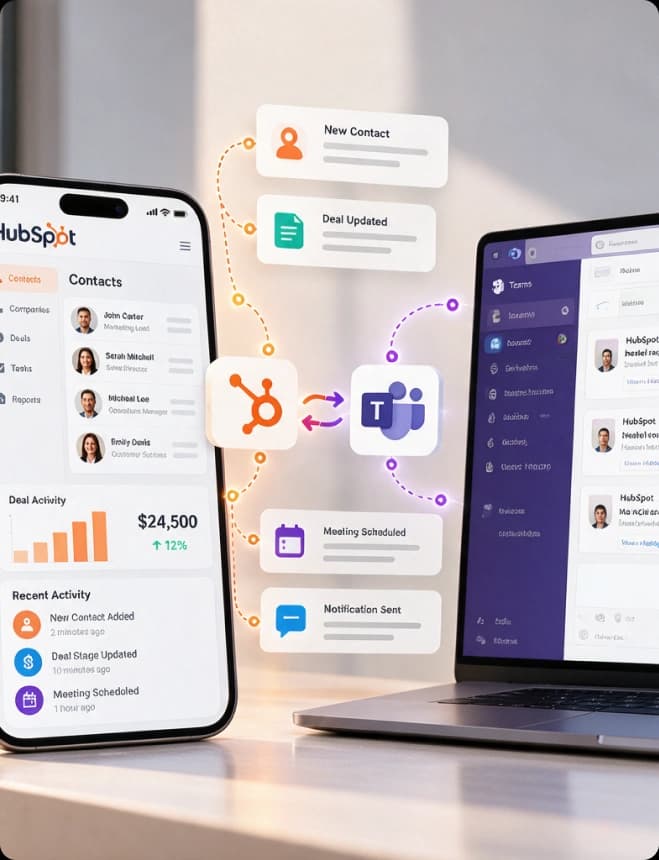
WebGuruz approaches HubSpot Shopify integration as part of a wider ecommerce and customer lifecycle strategy. Our process focuses on data accuracy, useful automation, clear reporting, and a setup that supports your business requirements.
Review your Shopify store, customer records, order workflows, marketing automation, and business goals.
Define how customer, order, product, and lifecycle information should move between the platforms.
Configure suitable workflows for abandoned carts, post-purchase communication, customer segmentation, and lifecycle campaigns.
Align customer and order data with reporting needs to improve visibility into marketing and customer activity.
Validate the integration, review synchronization behavior, and refine workflows as your ecommerce operations grow.
Businesses often use Shopify to run their online stores and HubSpot to manage customer relationships and marketing. Connecting the two platforms can help teams use purchase activity to support post-purchase campaigns, customer re-engagement, and repeat purchase strategies.
Marketing teams can build more relevant customer journeys, while other teams gain better visibility into customer activity and order history.
As an ecommerce business grows, customer records, purchase history, and marketing performance can become fragmented. A connected HubSpot and Shopify setup can help align information, reduce manual data management, and support more consistent reporting.
Where the required data and workflow capabilities are available, businesses can use cart and order activity to trigger recovery messages, order follow-ups, and post-purchase communication.
Purchase history and engagement data can help businesses group customers by behavior, identify retention opportunities, and plan relevant promotions or re-engagement campaigns.
The data available for synchronization depends on the integration method, platform configuration, and business requirements. The following table shows possible mapping areas to assess during planning. Some mappings may require custom development or additional integration tools.
| Shopify Data | Potential HubSpot Mapping | Business Purpose |
|---|---|---|
| Customers | Contacts | Build more complete customer profiles |
| Orders | Deals or supported custom records | Connect purchases with CRM activity |
| Products | Supported product records or custom properties | Support product-related reporting |
| Product variants | Relevant product properties | Track preferences such as size or color |
| SKUs | Product identifiers or mapped properties | Support product-level analysis |
| Order status | Mapped contact, deal, or custom record properties | Support order-related communication |
| Abandoned carts | Available cart data and configured workflows | Support cart recovery campaigns |
| Discounts and coupons | Mapped promotional or campaign data | Assess promotional activity |
| Fulfillment status | Supported order or customer record fields | Improve order journey visibility |
| Refunds and returns | Supported records or mapped CRM activity | Support service and retention workflows |
| Customer tags | Contact properties or mapped fields | Support customer segmentation |
| Purchase history | Available order and lifecycle data | Inform retention and repeat purchase campaigns |
AI-powered ecommerce marketing needs connected and reliable data. Fragmented customer and purchase information can limit personalization and analysis.
WebGuruz connects HubSpot and Shopify data to support customer insights, marketing automation, and ecommerce reporting. AI capabilities depend on available tools and configuration.

Depending on the tools and configuration available, connected ecommerce data can support initiatives such as:
These are potential use cases, not a guarantee that every capability is included as a native feature of the HubSpot Shopify integration.
Ecommerce integration involves more than connecting an online store to a CRM. Businesses need reliable data mapping, relevant automation, useful reporting, and a setup that supports their customer lifecycle.
WebGuruz brings ecommerce and HubSpot expertise together to help businesses connect customer information, improve workflows, and support long-term operational needs.

Align store operations, customer data, and marketing workflows with your business goals.
Support integration planning, CRM configuration, lifecycle automation, and reporting requirements.
Follow a clear process for assessment, data mapping, configuration, testing, and validation.
Address customer synchronization, ecommerce workflows, custom integration requirements, and reporting needs.
Plan a connected environment that can support changes in products, customers, and business operations.
Review workflows, data consistency, and reporting as your ecommerce requirements evolve.
HubSpot Shopify integration needs vary based on product catalogs, purchase cycles, customer behavior, and marketing requirements. We help businesses plan integration workflows around their operating models.






Connect ecommerce and CRM data, simplify customer management, and support more relevant marketing with an integration strategy built around your business needs.
Book An Appointment
A move to HubSpot rarely fails on launch day. The import report says “complete,” the contacts are there, and the deals sit in the pipeline.
Read More →
Your business uses HubSpot to manage customer relationships, but disconnected systems create data issues.
Read More →
Building a website takes more than picking colors, dropping in images, and writing copy.
Read More →