 sales@webguruz.in
 +1 (213) 715-5368

Vedanshi
2026-11-16
7 min read
Google’s Black Friday Core Update: What SEO Services for Small Business Should Fix First
On November 10, Google released its November 2026 core update and said the rollout may take up to two weeks.
Read More
Published On:2026-10-29
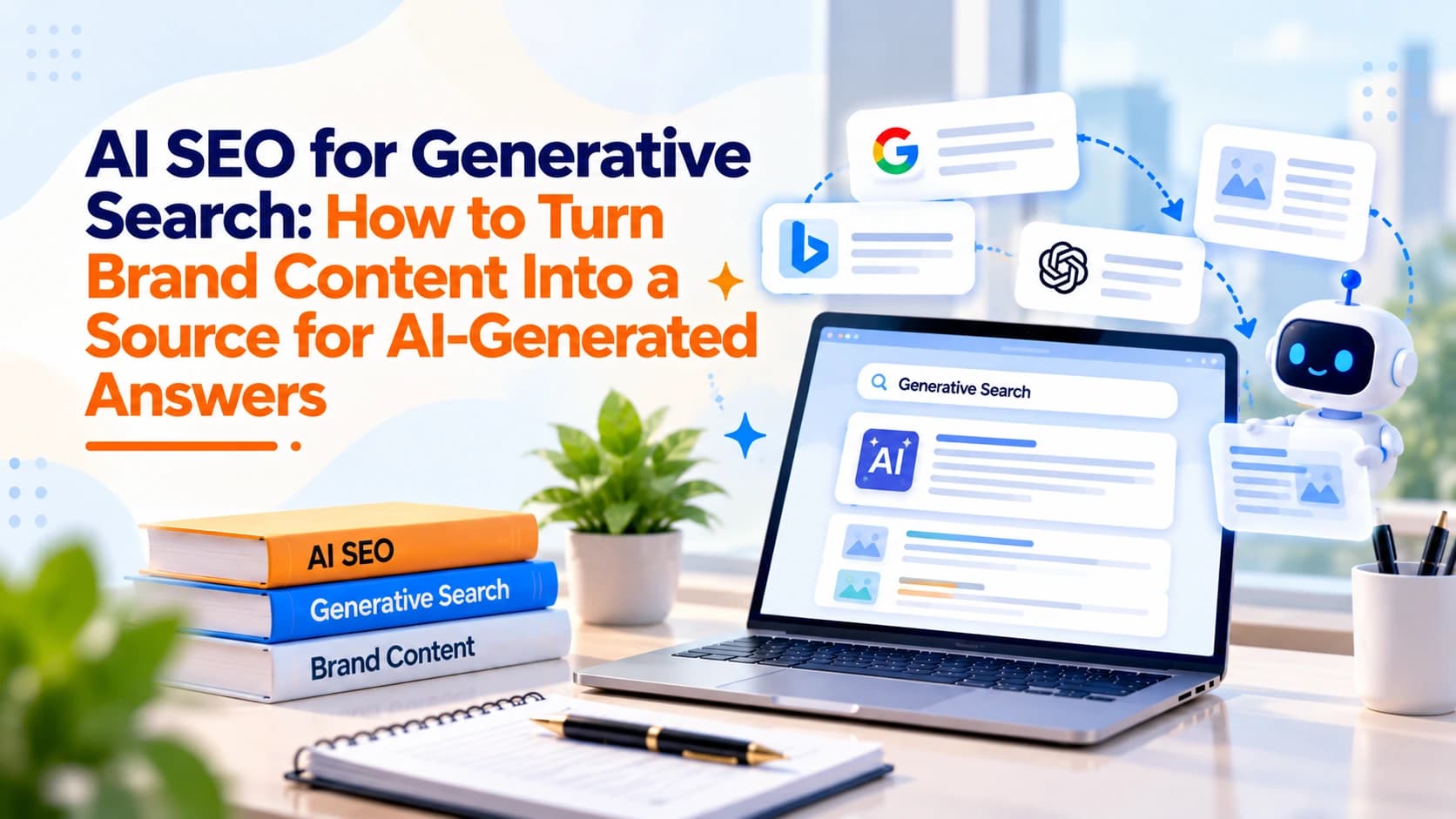
Ask ChatGPT, Perplexity, or Google’s AI Mode a question about your industry, and you will get a confident answer in seconds. The bigger question is whose information shaped it. Often, the brands named are not the ones ranking first, but the ones whose content an AI system could understand, trust, and quote.
That shift is what AI SEO for generative search is about. Instead of competing only for a blue link, brands now compete to become a source: the page an AI tool pulls a fact from, the company it recommends, and the definition it repeats.
With Google AI reshaping SEO and other answer engines following close behind, here is how AI systems choose sources and how to make your content one of them.
For years, search meant ranking on page one and earning the click. AI-generated answers changed that, because many people now read the summary and move on.
A Pew Research Center analysis of real browsing data found that Google users who saw an AI summary clicked a traditional search result in just 8% of visits, compared with 15% for users who did not see one.
This does not make websites less important, but it changes what success looks like. If your brand is the source behind the answer, you still gain visibility and credibility without an immediate click. Many buyers research with AI first and visit only a shortlist of sites later, so being named early often decides whether you make it.
Through AI Overviews and AI Mode, a page can rank well and still be left out of the summary most users actually read.

Most AI search tools search the web or their own index, retrieve relevant pages, break them into passages, and write an answer from the passages they trust most. Several signals influence which passages make the cut:

Open every key section with a direct, two- or three-sentence answer to the question in its heading, then add context and examples. This answer-first format mirrors how people query AI tools and gives the system a clean passage to lift.
Statements like “we deliver great results” give an AI model nothing to work with. A GEO study by researchers from Princeton University, Georgia Tech, the Allen Institute for AI and IIT Delhi found that adding statistics, credible quotations and source citations lifted visibility by up to 40%, while keyword stuffing performed poorly. Use original data where you have it, and always attribute it.
AI systems build an understanding of entities: who a company is, what it offers, and which topics it is known for. Keep your brand description consistent across your website, social profiles, and directories, and use Organization, FAQPage, and Article schema so machines can read key facts without guessing. A clear About page that names your leadership, locations, and expertise also strengthens E-E-A-T signals. Entity clarity is often the first thing an experienced AI SEO agency reviews, because gaps here quietly weaken every other effort.
AI tools rarely rely on what a brand says about itself. They look for corroboration in reviews, industry publications, comparison articles and expert roundups. Digital PR, genuine customer reviews and listings on the platforms your buyers use all help.
Generative engines favor information they can trust as current, especially for pricing, regulations and statistics. Show a “last updated” date, refresh figures regularly and remove outdated claims.
Content that only appears after JavaScript runs, sits behind a login or loads slowly may never reach an AI crawler. Allow the crawlers you want to be found by, such as OAI-SearchBot and PerplexityBot, in your robots.txt, and serve important text directly in the HTML.
Each AI platform retrieves and presents sources differently, so a brand that appears in one answer engine may be missing from another.
Perplexity displays its citations prominently and often surfaces recent, well-structured pages, making it a good place to test how citable new content is. Teams use Perplexity SEO tools alongside manual prompt checks to see which pages get cited and which competitors appear beside them.
Google’s AI Overviews and AI Mode lean heavily on pages that already perform well in organic search, which is why strong traditional SEO remains the foundation. Microsoft Copilot draws on Bing’s index, so a site that is poorly indexed in Bing can be overlooked there.
The practical takeaway: don’t optimize for one engine. Build clear, well-supported content once, then make sure each platform can find and trust it.
Start with where your audience asks questions, because search engines are only part of the picture. You can now find Meta AI inside WhatsApp, Instagram, and Facebook, where consumers ask quick questions about products and local businesses. Brands evaluating Meta AI solutions should make sure their public pages, business profiles, and FAQs answer those everyday questions clearly.
Next, look closely at what people actually ask in their own words. Sales calls, support tickets, site search data, and chat logs reveal the language your buyers use, which is often the same language they type into AI tools. Build content around those questions, then reuse the strongest answers across your blog, FAQs, social posts, and emails so the same accurate message appears everywhere.
AI can speed up this kind of work, but it should never replace real expertise. Content that simply repeats what already exists online gives AI systems no reason to cite it, while original thinking, firsthand experience, and proprietary data do.
The strongest teams use AI to research faster, spot content gaps and draft first versions, then rely on specialists to check facts, add insight and protect the brand voice. A sound approach to generative AI marketing keeps that balance, using AI for speed while human experts stay responsible for accuracy.
Traditional rank tracking will not show whether AI tools mention your brand, so you need a different set of checks.
Begin with 20 to 50 prompts your buyers are likely to ask, from broad questions to comparison and pricing queries. Run them regularly across ChatGPT, Google AI Mode, Perplexity, Gemini, and Copilot, and record whether your brand is mentioned, whether your pages are cited, and which competitors appear.
Then compare that data with the numbers you already trust: referral traffic from AI platforms, branded search trends, direct traffic, and lead quality. Gains from AI visibility often show up first as more branded searches and better-informed leads rather than a jump in clicks.
The challenge is that this information usually lives in separate places: trackers, analytics, the CRM, and sales notes. For larger teams, AI integration services can connect these systems so citation tracking, content updates, and lead data feed into one workflow.
Generative search rewards brands that are easy to understand, easy to verify, and genuinely useful. The work is not radically different from good SEO, but the standard is higher. Every important page should answer a real question clearly, support its claims with evidence, and show who stands behind it.
Start small. Choose your ten most valuable pages, rewrite their key sections in an answer-first format, add sourced data, tighten your schema, and test how AI tools respond over the following weeks. Expand what works and revisit what doesn’t.
Consistency matters more than any single tactic, because AI platforms update often. Treat AI visibility as a habit: review your priority prompts every month and update pages when the answers change. If your team lacks the time or in-house expertise to manage this, specialist answer engine optimization services can audit your AI visibility, prioritize fixes, and track progress across platforms.
It is the practice of shaping your content so AI tools such as ChatGPT, Google AI Overviews and Perplexity can understand, trust and cite it.
Traditional SEO focuses on ranking pages in search results. AI SEO focuses on being selected as a source when AI tools generate answers. Strong traditional SEO remains the foundation for both.
Most brands see early changes within three to six months, depending on authority, content quality and competition.
No. AI responses change constantly. The realistic goal is to strengthen the signals AI platforms rely on and track progress over time.
Yes, indirectly. Schema helps AI systems read key facts about your brand and content accurately, but it works best alongside clear, well-sourced writing.
Vedanshi
2026-11-16
7 min read
On November 10, Google released its November 2026 core update and said the rollout may take up to two weeks.
Read More
Vedanshi
2026-11-12
7 min read
HubSpot made some of its biggest automation changes in years during 2026.
Read More
Vedanshi
2026-11-11
7 min read
In April 2026, HubSpot put a hard number on something marketers had felt for months.
Read More